


Trigger warning: I will be writing in first person. For my readers who aren’t 25. I sincerely apologize for my incredibly online-gen-z take. I guess this essay itself is ageist.
There’s a strict divide in my generation (I’m gen-Z),1 between the half of us who hate AI and the other half that love it. Makes sense: half of us are coming into exorbitant amounts of wealth having had a semi-decent startup idea.2 The other half, acutely aware of (or personally affected by) AI’s implications, fear the scale of its influence.
But no one —and I mean NO ONE— loves AI more than boomers.
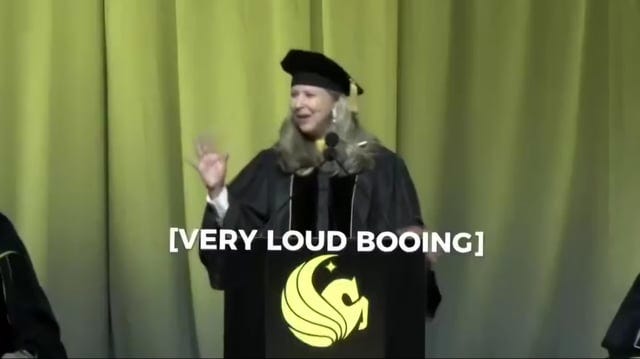
Graduation season is upon us and commencement speakers are getting boo-ed off stage for their celebration of AI: former Google CEO Eric Schmidt, real-estate executive Gloria Caulfield, Nashville record executive Scott Borchetta… just to name a few. Frankly, I’m surprised it took them this long to start raving about AI. I am equally confused as to why they thought it was a good idea.
“Don’t be stubborn. You’ll be left behind without it. Deal with it.”3
… seemed to be the prevailing sentiment of the speeches. Whether or not these speakers meant it that way. All that’s left of their speeches are the sound bites (and Gemini search summaries) that most people will see/have seen, anyway. It struck a nerve to say the least. What did they expect? Telling a class graduating into a world that’s sucked the life out of the phrase “unprecedented” — largely because of AI.
However, to play devil’s advocate, I don’t think my generation sees the full picture. You see, there’s a privilege that comes with being anti-AI. Just not the kind you think.
A Gen-Z luddite is radical and well-informed.
A boomer luddite is just stubborn.
The concept of rejecting tech is literally over 200 years old. It’s only cool now cause the kids are doing it.

There’s this assumption that, because my generation was born into a fully-digitized world, we (by default) love modern technology. We grew up with smartphones, so we must love doomscrolling (many of us do). Engaging with other another via social media is the norm, therefore we must live by it.
This assumption makes my generation’s rejection of technology novel. It centers legacy media’s fascination with neo-luddites around age: every profile written about the Lamp Club/the Luddite Club/any other luddite-adjacent organization fixates on how young these self-described revolutionaries are.
Because Gen-Z/Alpha can’t hold onto a past they never had, the decision to actively reject technology is seen as an informed one. I can’t reminisce about a time where everything was analog. My parents, however, can. The conversation about AI, amongst generations older than mine, therefore becomes emotional: are YOU resistant to change because YOU’RE too attached to the past?

The gist is — being anti-AI below the age of 30 seems to signal a degree of critical thinking that’s rational, not emotional. Regardless of whether that’s actually the case.
They don’t want us to make the mistake they made
Chris Olah, Head of Interpretability at Anthropic, insists that AI is grown, not built. That means, for a model to reach it's “full potential,” one must train a model —the same way one raises a child— over a period of time. Eventually, AI will be able to solve [insert non-problem]. Eventually, this model will work. Eventually, we’ll have AGI.
To boomers, “eventually” can loosely mean: not in my lifetime. To boomers, AI’s full potential is reserved for the next generation.
If there’s anything boomers have learned from underestimating big tech’s meteoric rise or missing out on the crypto boom, it’s to never disparate technological development. The fruits of a fully AI-automated future is just on the horizon, protect the next generation from themselves and encourage adoption.
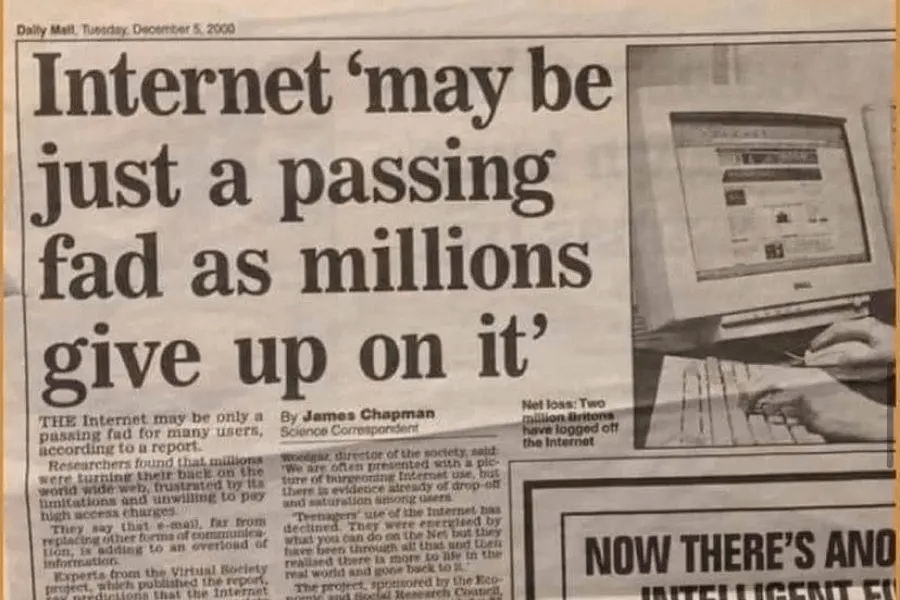
They’re just looking out for us. They don’t want us to miss out on the next big thing. They understand how we feel. Eventually, we’ll see the returns they once missed out on. Eventually, we’ll regret not buying into all this earlier.
I posted a note that went semi-viral last week about how online one must be to properly engage with what we can find on Substack. Living in our AI-native world feels the similar. We’re always missing the newest AI-term, technique, company. A perpetual sense of FOMO is imparted on us. We’re never fully in the know.
We bear the brunt of unbridled growth
This past weekend, I sat (in pouring rain) through my sister’s graduation, where Connecticut Senator Chris Murphy started his commencement speech with “I’m not a luddite, but…” He talked about celebrating inefficiencies and how our fixation on optimizing everything is dangerous. My parents marveled at the premise (they grew up in a world where innovation at a break-neck pace was all the rage). My sister resonated with the sentiment (all her peers are looking for ways to slow down).

In just one generation, the abundance that boundless innovation promised has backfired. Where our parents were promised convenience, accessibility, and radical connectivity, we now have surveillance capitalism, hidden delivery fees, and self-checkout cashiers that don’t work. Those just a few years older than me had the opportunity to work 7-figure jobs that gave out free massages, forced you to log off, and delivered your laundry to your door. Now, computer science majors looking to transcend class through the same cushy tech jobs are being turned away. Only recently have social media platforms started getting legally held responsible for the very harms they’ve researched and identified decades prior.
So no, many of us don’t see the bright future AI promises. Not after all that.
Graduation is meant to be this pivotal, cathartic, romantic moment where rosy-eyed twenty-somethings are ushered into a world of endless possibility. But every year, the conversations seem to shift slightly away from hope and inch closer to fighting for the status quo (democracy). We’ve been burned too many times. We face the reality of AI’s negative externalities —environmental, psychological, emotional— not our elders.4
On a slightly unrelated note, for some tiny doses of much-needed optimism, here are a few speeches I return to from time to time:
I feel for AI boomers
Not only were they forced to relinquish the “old-fashioned” lifestyle of paying in cash, reading the physical paper, and (according to my sister) making plans via phone calls, they’re now put in an existential position of determining what their legacy is.
Is it going to be a forward looking one? One built to be AI-native? Future-proofed? What advice can they bestow upon us? Especially when no one knows what to expect?
They want what’s best for us.
They don’t want to be left behind.
They just want to fit in.

Regardless of age, we’re all subject to our culture’s fascination with extremes. Perhaps the only “solution” is to acknowledge that 1) the invention of AI is not categorically a bad one, 2) AI is capable of (and currently inflicting) some serious harm, and 3) our best course of action is to protect our own sense of humanity.
“To disarm does not mean rejecting technology, but preventing it from dominating humanity,” Pope Leo wrote in his first encyclical, Magnifica Humanitas ("Magnificent Humanity"). Yes, the one where he quotes JRR Tolkien.
Hello! If you’ve made it this far — thank you for joining me on my neo-luddite pilgrimage. If you’d like to support some of my more rogue ventures in cyber celibacy (typewriters, building a printing press… more to come), upgrade to paid! You’ll find treats sprinkled in your inbox <3
Don’t worry, I cringed on your behalf.
A friend of mine (an AI-enthusiast and frequent hate-reader of this newsletter), once told me he admired my ability to consistently capture his attention on takes he firmly rejects.
In one case, Scott Borchetta actually uttered parts of that phrase in an unrehearsed quip.
Of course, the previous generation certainly didn’t have it easy.
Im not sure the argument that boomer luddites being seen as stubborn for rejecting AI while Gen Z are seen as intellects is strong enough to support such a harmful claim like “anti AI is ageist.” Being a Luddite has always been associated with being artistic, anti industry, pro nature, poetry, the “real” human experience. The people on the other side are the “pioneers” the industry folks, the entrepreneurs. Which is why the most important distinction between the acceptors and the rejecters of new tech isn’t age it’s: who stands to benefit from it vs who doesn’t (or who morally aligns with who doesn’t). That’s as true now as it was 100 years ago when people were complaining about electricity. And 50 years ago when they were worried about TV. That’s why, yes, there have been boomers making awkward speeches at graduations, but there are also plenty of boomers speaking against AI, just as there are plenty of young people who have given the “it’s here, we got live with it speech”.
If anything what’s ageist is generalizing older people and assuming they’re either unwilling or incapable of being critical about new technology for fear of being disliked by Gen Z. I truly don’t think I’ve ever met a boomer who would care what we think of them.
bruh this was such a clickbait title😭