


When will Apple realize that the girlies don’t want bigger screens… We don’t want the iPhone Duo!!! We want the iPhone mini back!!!
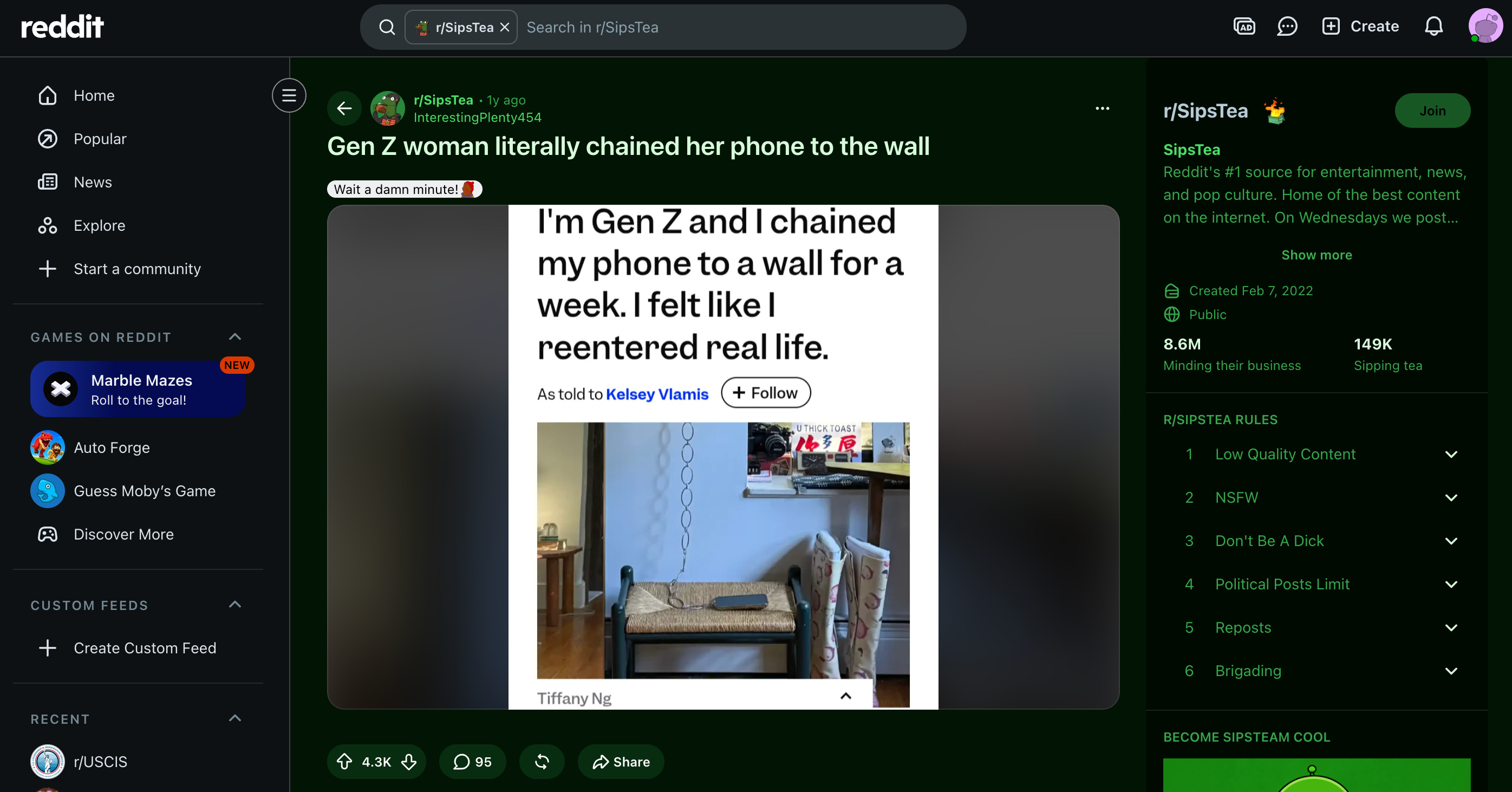
A year ago, I chained my phone to a wall. It changed my life in a few ways: I found an audience (hello, you <3), I severed my emotional attachment to my phone, and I realized how much a small physical change to my environment could foster an emotional one. It was a particularly headline-friendly experiment: attaching my phone to a wall cut my screen-time by 80%. 1
As much as my phone-chaining was celebrated, it was also met with much criticism: it wasn’t safe (especially for women going home alone at night); it wasn’t sustainable (two-factor authentication); it disabled other essential technology (maps). These qualms carve out the demand for today’s multi-billion dollar dumbphone economy.
But why would I spend more money on purchasing yet another device, when I can just make my own? And no — I don’t mean deleting apps on my existing phone.
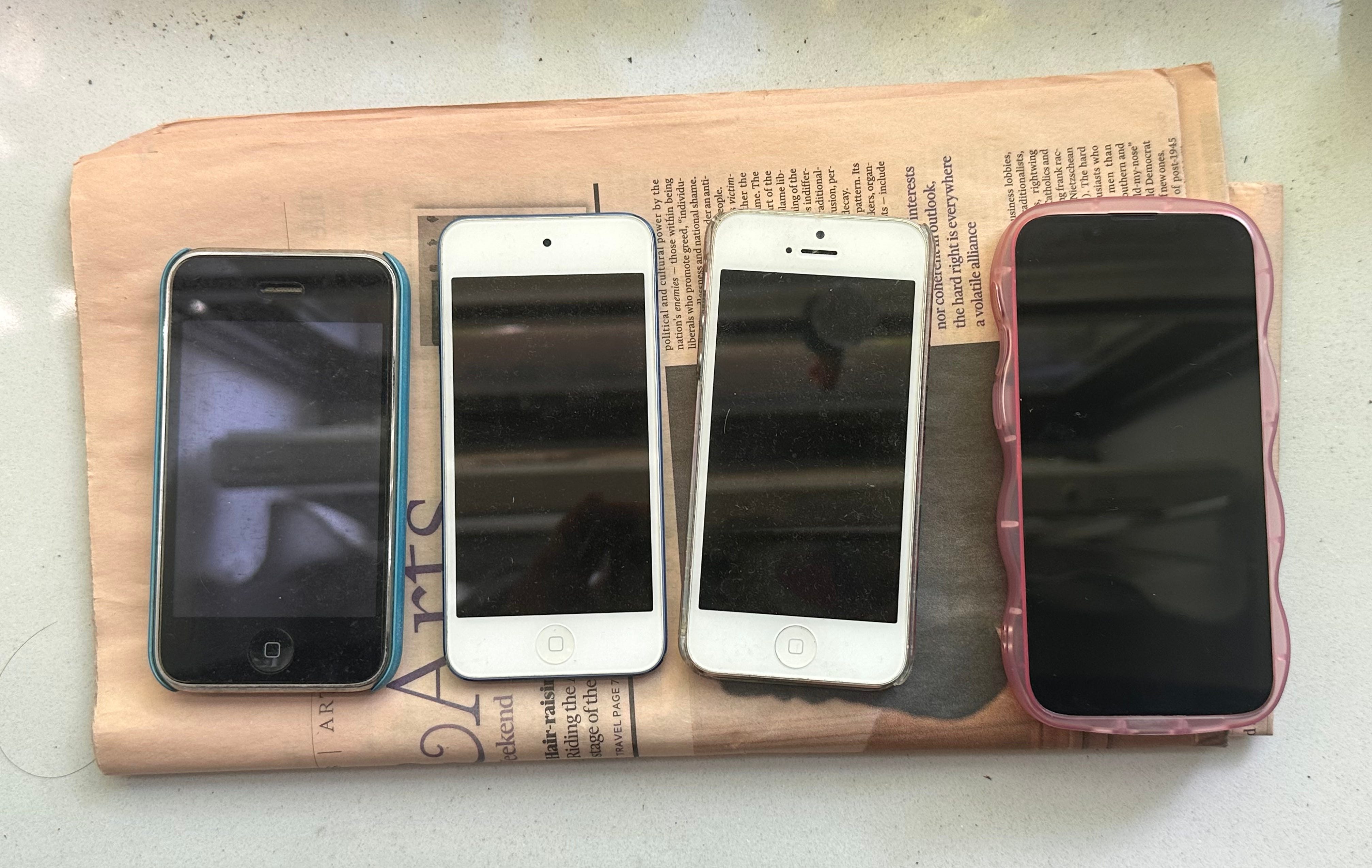
Making the mega-dumb dumbphone
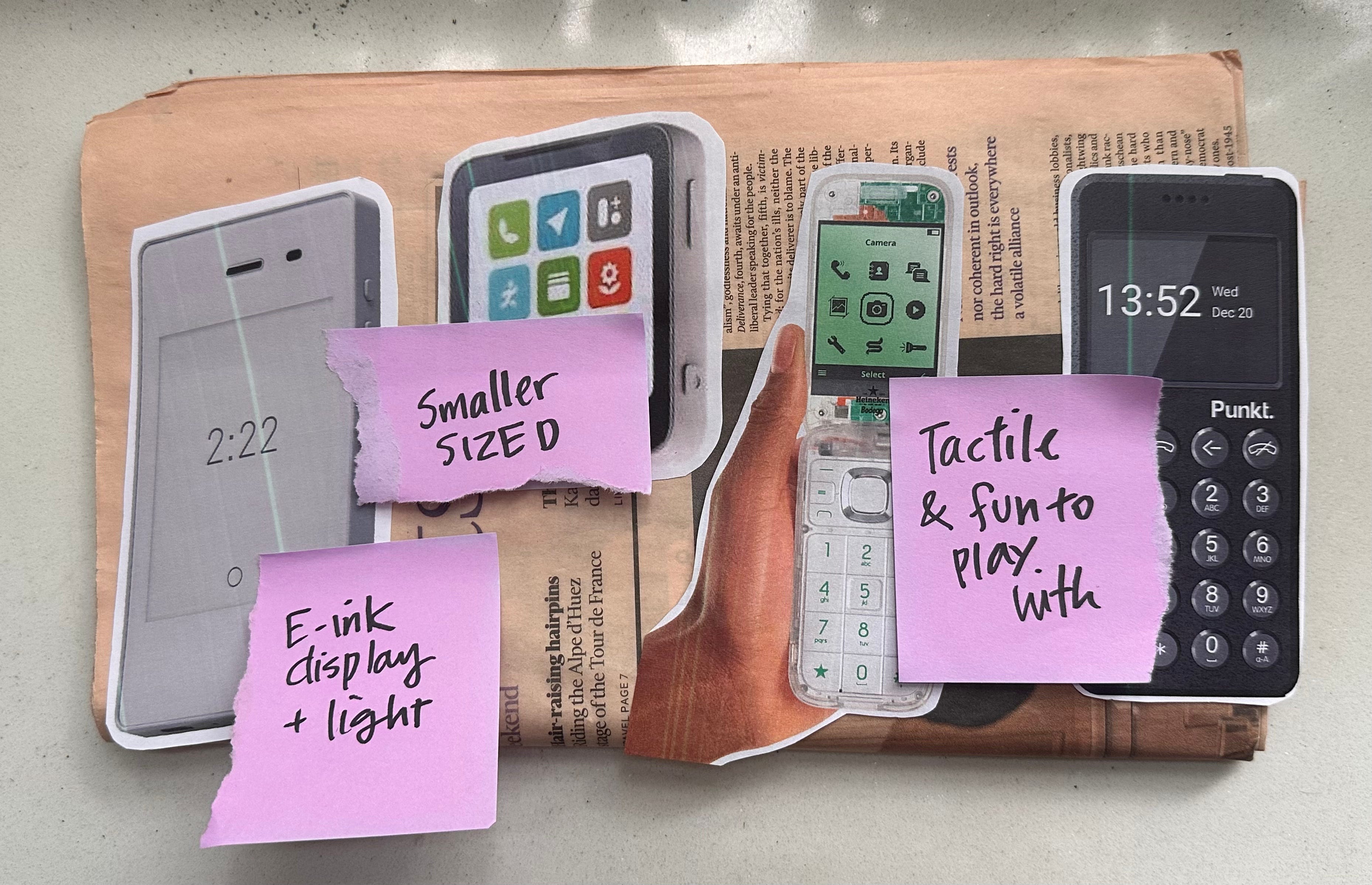
There’s a ton of different “digital wellness solutions” on the market: The Light phone; The Meadow (though its founders will insist it’s a “companion” not a dumb phone); The Brick is having a moment of its own. They each had features I liked, so I ported them to an iPhone mini I had retired a few years back. (To the best of my ability).
I was particularly intrigued by…
Meadow — limited contacts, separate phone number, different device shape
Light Phone — minimalist UI, E-ink-adjacent display
Punkt MC03 — “privacy bubble” where third party apps run in a sandbox
So I tinkered with my iPhone and…
Disconnected my iCloud + added only a select few to my contacts
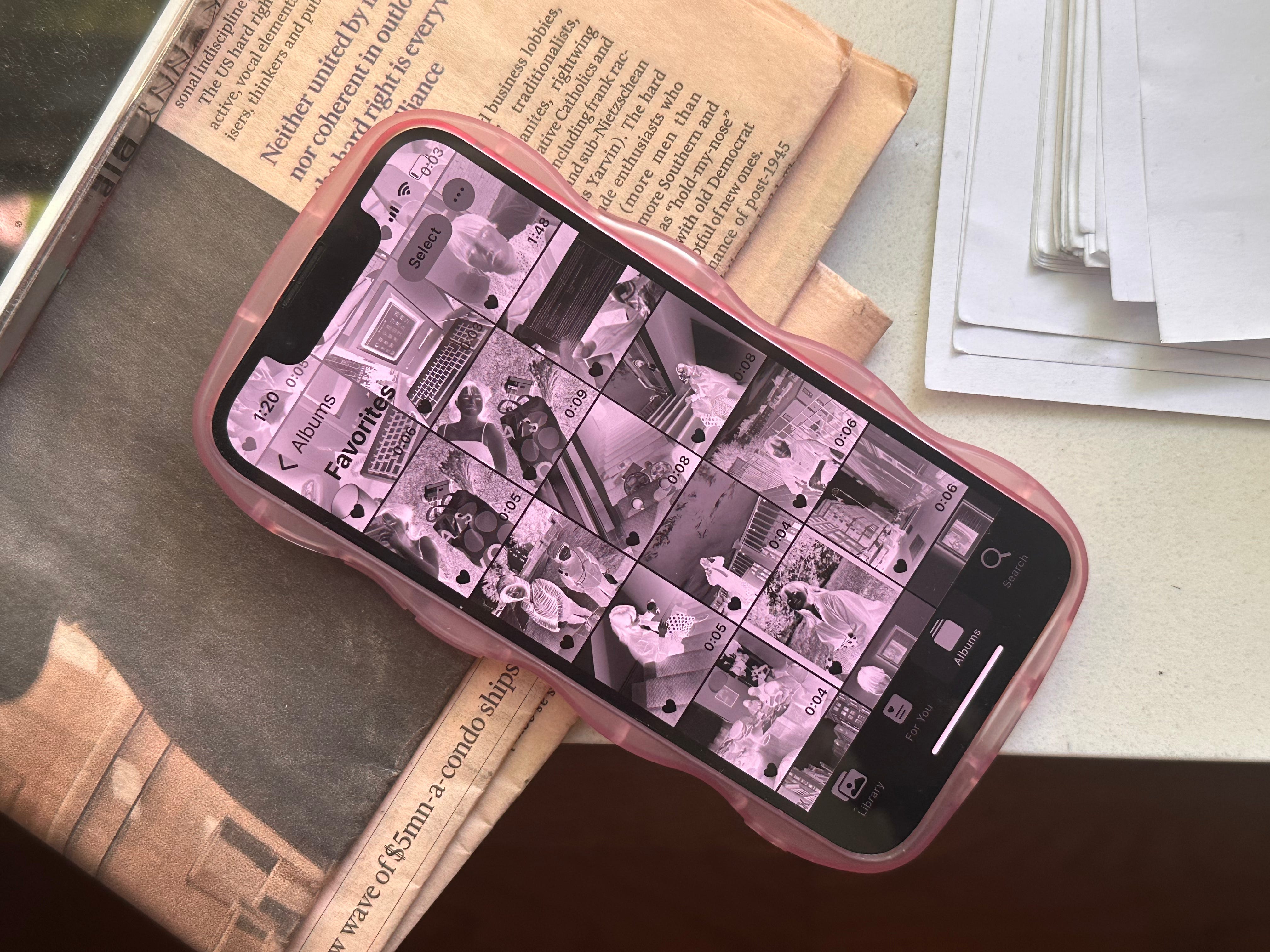
Turned my display black and white
Increased color contrast and inverted colors (really messes with images)
Removed most apps from my screen, leaving only my phone and maps
Fashioned a funky phone case
I wanted to make the experience of using my device as foreign and as difficult as possible. My “dumbphone” was there to take emergency calls, help me navigate, and enable two-factor authentication. My current phone was re-chained back on my wall.
The point isn’t to completely cut myself off! I just want to re-learn my boundaries.
Re-compartmentalizing my life
American sociologist Erving Goffman’s concept of front stage vs. back stage in his foundational text The Presentation of Self in Everyday Life (1959) compares social life to theatre. There is a “front stage” where we perform and a “back stage” where we relax and re-group — like a break room in the office or a kitchen to a restaurant floor. His theory focuses on the code-switching that occurs when you go from one room to another and how this ceasing of “performance” is less an escape from the show than what keeps the show running.

There used to be technological obstacles that cumulated to this wall: landlines, snail mail, pagers. Certain activities would be limited to —and therefore associated with— certain contexts (eg. typewriters in an office or TV in a TV room). But now, everything is available on our devices. We can do basically anything anytime, all while being infinitely accessible. We’re exhausted all the time because we can’t “turn it off.” I’ve long romanticized the notion of having “operating hours” for the internet. Maybe it could build this wall that Goffman speaks of.
By having essentially a “work phone” (or a “going-outside” phone) and a “scroll” phone, I wanted to slowly reintroduce soft, physical boundaries to my everyday. I fiddled with my phone settings/set up to …
Pavlov myself into associating the feeling of a prickly stool with the disjointed sounds of TikTok
Turn myself off from texting on my teeny tiny screen and call my friends more
Distort images enough to nudge me towards only using it for text-based purposes
Consider the device as it’s own entity since it’s not synced to my digital ecosystem
Get used to conserving my battery because it always ran out too quickly
Perhaps my favourite experience from this shift was when I went to a startup tech mixer to report on a story I was working on (not this one). Everyone insisted on giving me their contact information via Apple’s NameDrop function (where you transfer contact info by touching phones). No one knew how to react when I told them I didn’t have LinkedIn. Everyone was trying to contain their distaste for my darling device.
And history repeats itself…
A few months back, I noticed a TikTok trend where people gave tours of their retired devices. It was a rare but beautiful moment where Gen-Z and Gen-Xers bonded over what was considered an “archaic” device. I was reminded of how cell phones used to have whimsical varieties. Luxury fashion brands used to have limited edition drops!


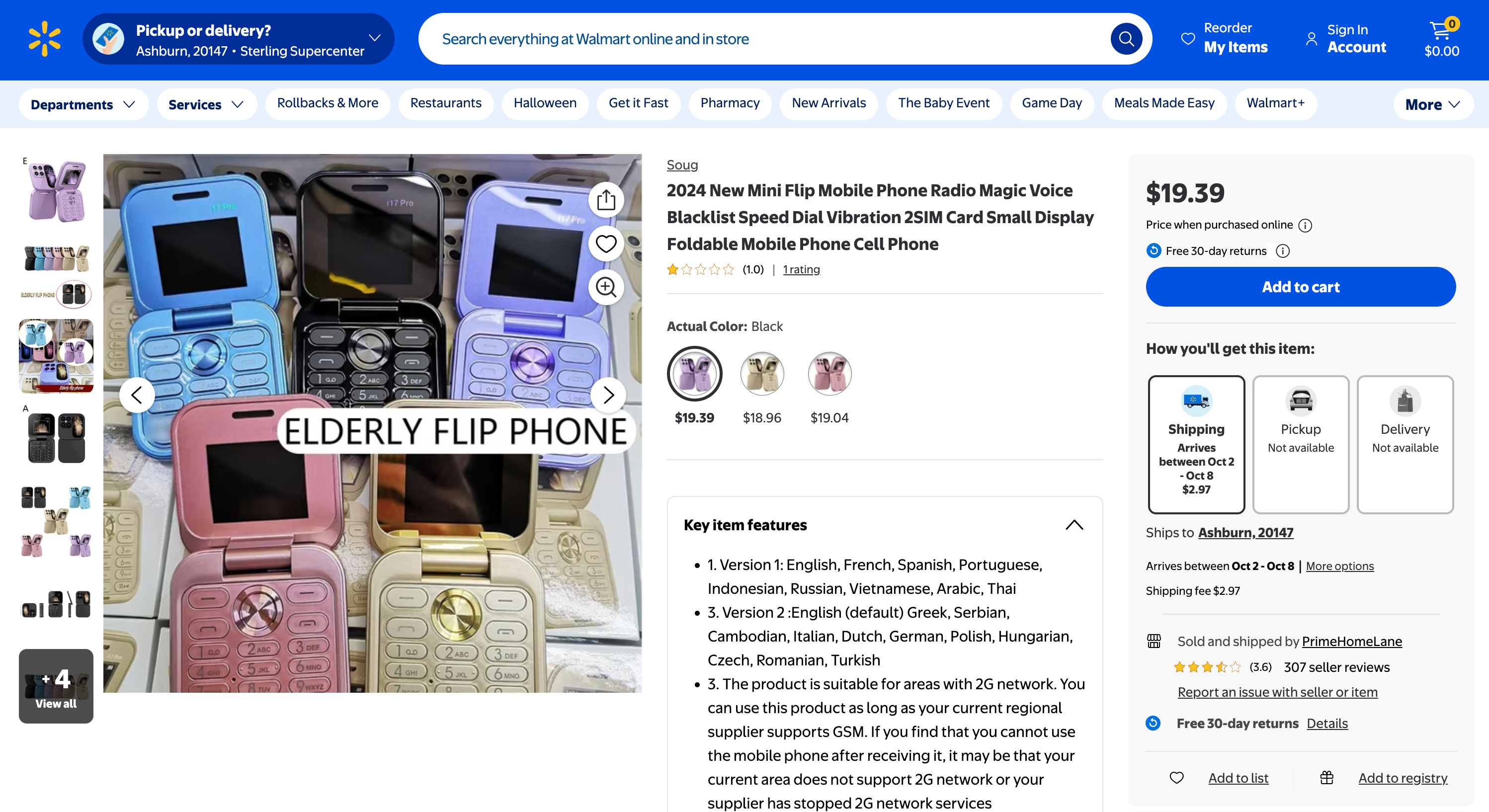
I’ll admit. I am tickled by today’s analog-dumb-phone-revival. To see an internet trend trickle down corporations like Walmart to result in a $20 mini-flip-phone toy will never not be entertaining. I just think that making use of what we already have isn’t as daunting as it seems. All it takes is a little tinkering and a lot of customizing.
Besides, who cares if you jailbreak an old phone! It’s warranty is definitely expired!!!
This article was sponsored by Backmarket (The Slow Tech Times)! <3
Hello! If you’ve made it this far — thank you for joining me on my neo-luddite pilgrimage. If you’d like to support some of my more rogue ventures in cyber celibacy (typewriters, building a printing press… more to come), upgrade to paid! You’ll find treats sprinkled in your inbox <3
***
If you’ve been a long-time subscriber, you’d know how I feel about this way of framing digital wellness!
Have you seen what Clicks is doing? I've been seriously considering getting Cicks Communicator as a second phone but it runs on Android and costs way too much for a second phone...