


Staying informed is important, but exhausting. But when war can be waged overnight, often reported the same way as the debut of a new celebrity couple, I start to question what being responsibly “kept up” with the news means.
To investigate, I gave up on reading the news online. I thought, maybe if pop up ads and push notifications couldn’t reach me, I’d have a more peaceful (perhaps even meditative) time combing through the dumpster fire we call current affairs.
What I discovered was a new relationship with the news. One that’s less… detrimental.


What I gave up: online news
How did I cope: print media
Did it suck: still trying to do it as much as I can
It’s impossible to keep up
How do you keep up? Do you follow a strict regiment of sifting through a few trusted outlets everyday? Do you read an article only when you see it on your FYP?
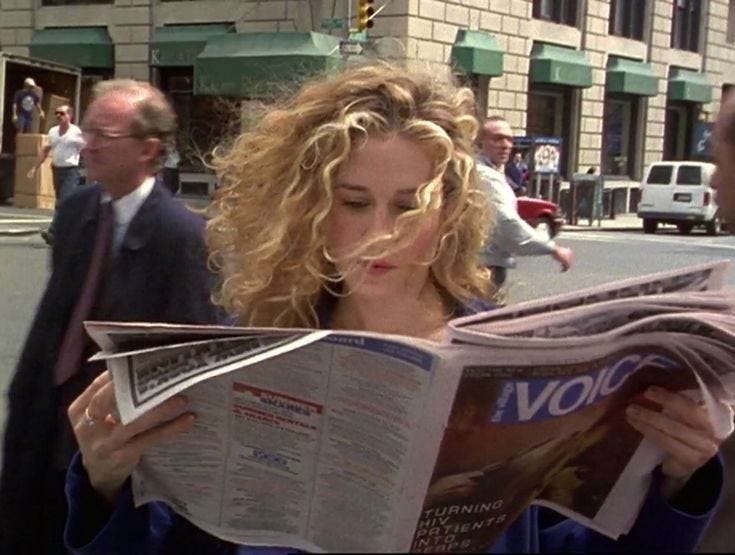
Engaging with the news feels a little like swatting flies
I get over 100 news alerts everyday (perhaps because everything is considered breaking news now). I struggle to finish an article without getting distracted by notifications about something new. I’ve tried making a habit of listening to The Daily during my morning commutes and comb through Apple News if I finish my episode early. But —despite taking partial comfort in knowing that a robust editorial team decides whatI should learn about each day— I never feel like I’m doing enough to stay informed.
Should everything be news?
We’re constantly being fed so much information, it’s only natural that many of us turn to skimming headlines and watching 15-second TikToks to keep up. There’s an opportunity cost for every issue you choose to engage with: time spent reading a New Yorker feature is time not spent catching up on a dozen Vox explainers.
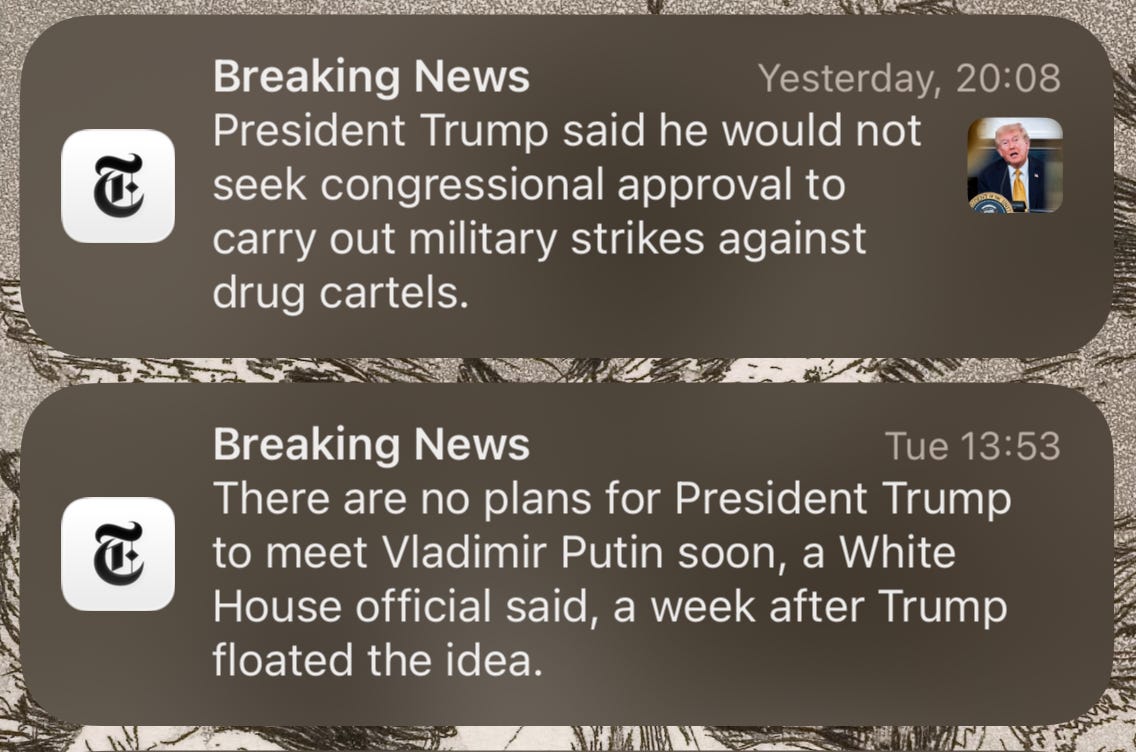
Not long ago, The New York Times reported two non-events as breaking. If we look closer to the stuff forced upon us, how much of it is actually necessary? “Trump isn’t meeting Putin soon,” well… who asked? William Randolph Hearst, yes THAT Hearst, once said: “News is something somebody doesn’t want printed; all else is advertising.”1
Reading the news used to be much less work
Aside from the fact that less was being covered, pre-internet news required much less critical thinking. We didn’t have to constantly assess the ulterior motives behind teach article: is this rage bait? is this biased research? does this link to a click farm?
The news used to be just… objective* reporting
*Of course, whether truly ‘objective’ reporting exists has long been a controversial subject. Neil Postman and Paul Ricoeur (among many others) have some extensive thoughts on this.
In a 9-year old Youtube video titled How to… read the news, a Financial Times journalist talks about breaking our bubbles: “if you’re a committed liberal, try Fox News!”

… and they’re right. Sometimes I venture into the darker (to me) parts of the internet to sort-of even out my algorithm. At the very least, we should see how the other side talks about things (regardless of how absurd it may seem).
The video prompts us to ask ourselves
How many sources can you spot?
Has the news actually happened? Are terms like “may”, “threatened”, “could” being used?
Who is writing this and why?
The rise of independent journalism fuels this fire. I experience a wave of anxiety every time I email this list —are my facts objectively true? have I cited enough sources? how do I demonstrate the validity of my takes? Attention is power, and it’s important that those with platforms hold themselves accountable!
How to read the news offline
The impulse to unplug applies for most things in my life. I, and likely many others, want to hide the woods, build a hut, and start my own fire.2 With news, the solution was less labor intensive: I just had to purchase a print subscription.


Anyone above the age of 25 can ignore this. I’m sorry my generation has come to this.
Cover stories aren’t fully printed on the cover! The same way you see previews of heds and deks on a publication’s landing page, I learned that stories printed on the front page are only a fraction of the full piece. You have to jump to a specified section to continue reading (e.g “jump to B7”).
There’s a code to what’s printed where. You’ll see “codes” like B7 or A4, that just refers to the section and page (A = front page/main news/international; B = metro/local news; C = business/finance; etc.).
Each day of the week corresponds to a “bonus” section. For NYT, you get the Styles section on Thursdays, Arts & Leisure on Fridays.
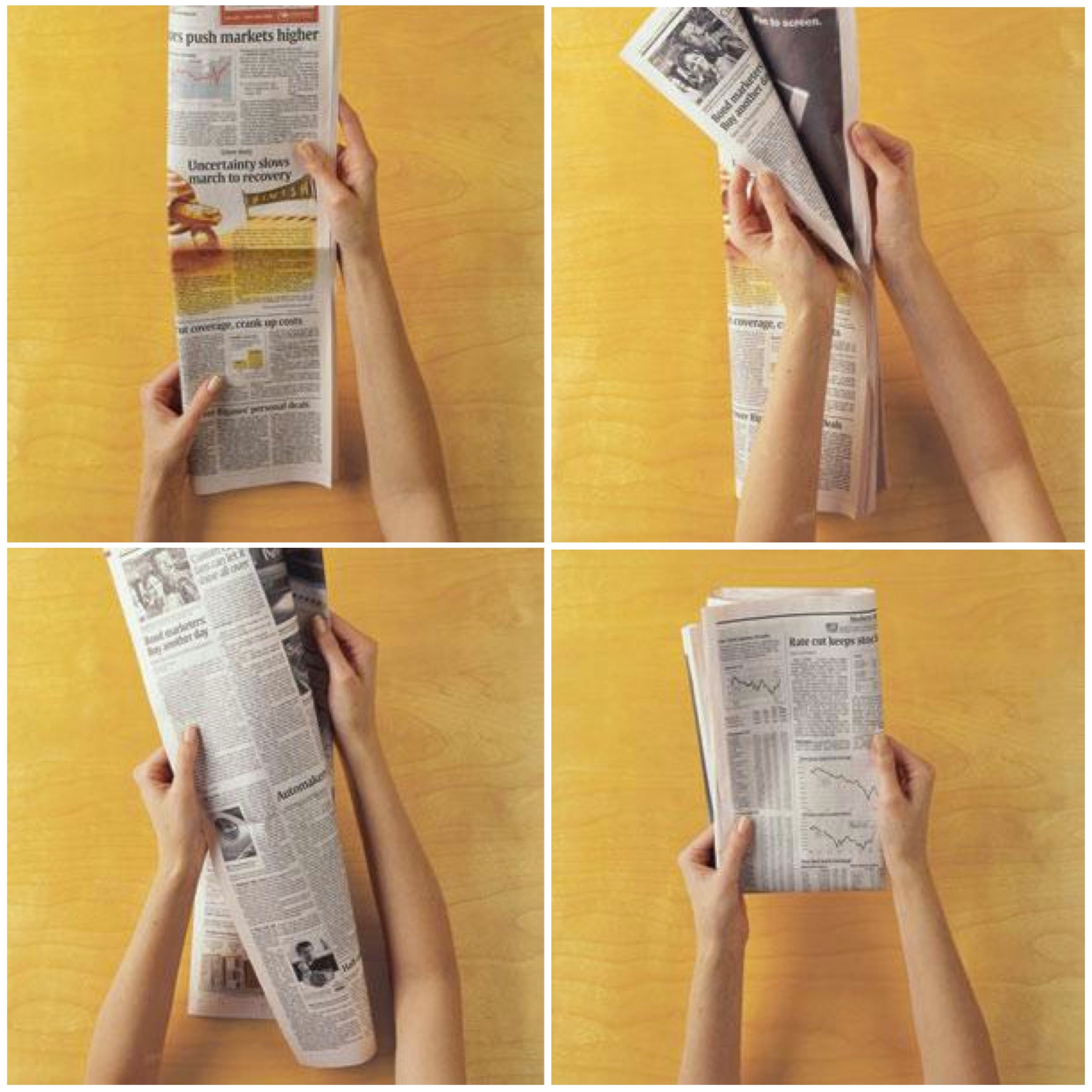
There’s a proper way to fold a newspaper. See below…
It can be… expensive (and hard to find)
A copy of The New York Times is the same(ish) as a cup of coffee in New York ($4). The print subscription may be cheaper, but its wildly unreliable — I had to fight several AI bots to make sure I got my paper delivered. Even if you were up to trade your morning coffee with the paper, most newsstands don’t sell the paper anymore… just gum and beverages.
I spent a couple days scouring bodegas around me asking where I could find the paper. I was greeted mostly with puzzled faces and advice to go online (to order it).


Print the digital stuff out
Before you say it, I know there’s a ton of important material that only exists online (this Substack, for instance 😉). So I took the advice of my 2025 self and printed things out. An added benefit: you can occasionally bypass paywalls!

A few days ago, author (Deezlinks legend) Delia Cai called printing out articles to read on the dodgy-serviced train “undergrad-maxxing.” Maybe nostalgia factors into this… I was the last graduating class to have to write finals in bluebooks.
Why I felt more grounded
The best part was the silence.
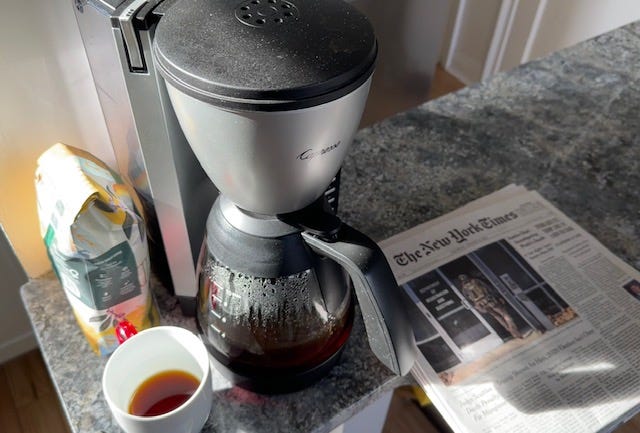
I followed a strict morning routine: put on a pot of coffee, grab my paper, and read as I charge my phone in the other room.3 It felt meditative. Nothing could interrupt me. There were no pop-up ads forcing me to give up my privacy preferences or sell me stuff. No clickbait. No hyperlinks for me to click into. Just printed text.
I read articles I wouldn’t have seen before
The simple act of flipping through pages of text (to get to the second half of a cover story) exposes me to headlines that would’ve never otherwise be on my radar. News aggregates recommends things based on your preference, publications prioritize articles with high engagement, and the “smaller” stories get buried.


**I shouldn’t discount the fact that how a headline is written or what ends up on the front page is inherently political. Artists Mira Schor and Sho Shibuya have very different takes on this.
There is an end to the reading
Rather than trying to constantly keep up, I make sure that the news has my undivided attention for the first 30-45 minutes of my mornings. I don’t want to skim through soundbites throughout the day and not be properly informed on anything. I like that there’s an end to the newspaper, that we can’t exactly doom scroll through it.
Newspapers help us master detachment
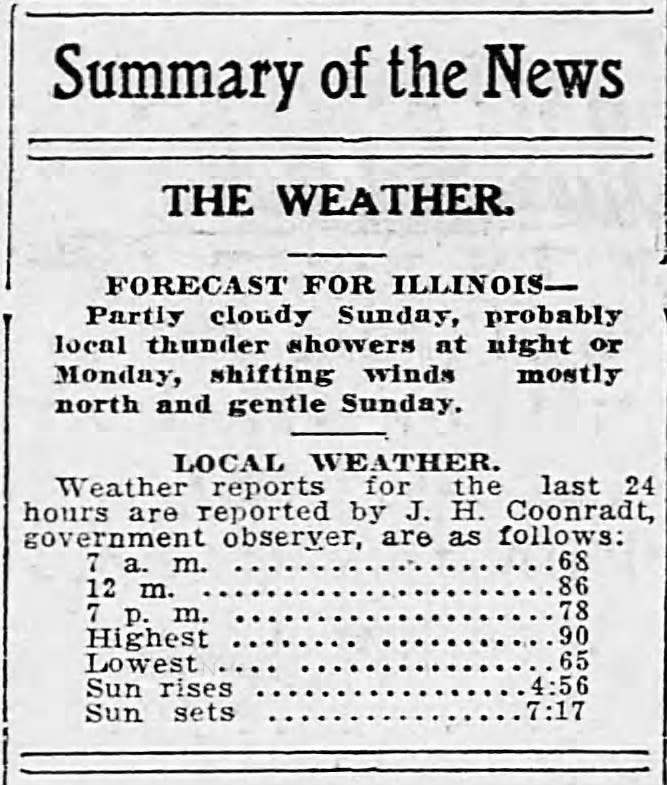
Being someone who checks the weather app several times each day, I thought (at first) that printing the weather on the back of every newspaper was silly. It reminded me of how ephemeral each copy of the newspaper was and, by contrast, how permanent/authoritative the digital format seemed.
A bit of a distant inference, but Buddhist teachings (upekkha or vairagya depending on tradition) describe how our sense of stability erodes when we depend on material things staying a certain way. Being comfortable with change, detaching yourself from these seemingly permanent notions of truth, is the key to feeling grounded.
Maybe the weight the digital format gives us the illusion of stability: OpenAI WILL destroy us; there IS NO cure to screen time; we ARE in WWIII. Such that, when things inevitably shift (often within hours), we feel lost. Ironically, the physical weight of newspapers —riddled with predictions of thunderstorms that never come— remind us of the fleeting nature of life.
How much should we be keeping up?
In 2024, I binged the entirety of Aaron Sorkin’s The Newsroom4 in a few days. It was election year. I wasn’t feeling too hot about the state of media. Who can blame me.
The show mostly investigates questions on epistemic morality —what stories should be told, what does truth mean, where does media fit in all this— and opens with the iconic scene where Dumb and Dumber actor Jeff Daniel schools a sorority girl on her question: why is America the greatest country in the world? He answers: no, it’s not.
As most Sorkin shows go, the fundamental sense of morality written into each Newsroom character frames journalism as humanity’s only hope. Only through uncovering ‘truth’ and giving people ‘the full picture’ can we be saved. But is it possible for us to always have the full picture?
Maybe it’s not a moral duty as much as a political obligation
The term “informed” feels very Gen-Z to me. We’re constantly telling/told to “educate ourselves,” moralizing the act of reading the news. This spills into existing discourse on the privilege of ignorance: folks living on ivory towers don’t have to worry about rising gas prices, tariffs, rezoning, labor laws… let’s not forget this iconic scene in Succession where Roman Roy guesses the price of milk.
But where does this moral prerogative come from? Kant and Mill gives us an idea:
Kant believes that duty of being intellectually curious (in this case, staying informed) comes from within. He talks about how ignorance degrades our own rational agency, and that we’re more susceptible to manipulation when we’re ill informed.
Mill, on the other hand, argues that we have a duty to stay informed because our quality of living depends on our collective intelligence. What he calls the “marketplace of ideas” can’t yield good results when the epistemic forces acting within it are watered down. Being ignorant hurts society more than it hurts ourselves: it helps us make better political decisions (which, inevitably, bleeds into our sense of morality). According to The Washington Post, democracy dies in darkness. 5


Keep up with local news
Neil Postman writes about “Decontextualized Information” and our crisis of “actionability.” He argues that our ability to act on the information we receive used to be proportional. Now, starting with the invention of the telegraph, information is shared without context —news of sh*t happening continents away, with little to no immediate bearing on our lives dominate public consciousness. Our reactions to the news isn’t our ability to do something but rather, how we feel about it.
Perhaps the most pragmatic approach to staying informed is actually keeping up with your local community. Learn about the local zoning laws your your city council is voting on (so you can attend the meetings), help your neighbors out with a bake sale, go support a local business! I’ve long been fans of newsletters/calendars like the Brooklyn Buzz and Cal.red. While having a pulse on the biggest picture things is important, (most of us) have most agency over our local communities.
Hopecore
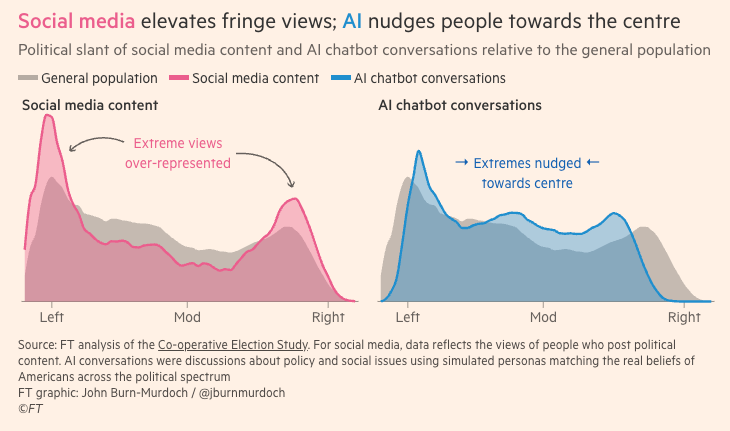
I’m a doomer for SURE. But to maintain our sanity, I think it’s important I give credit to the good that’s happening too: Vox has a newsletter dedicated to only reporting good news. UK publication Positive News calls this approach “constructive journalism.” The Financial Times recently shared an unlikely and (arguably) positive fact that the proliferation of AI use is actually starting to act against the polarizing effects of social media? Happy coincidence?
It was hard to untangle my messy thoughts and feelings about the state of the world when I’m constantly fighting off more information. From bearing the physical weight (and labor) of retrieving physical media, I was reminded of how finite these vessels of information can be. Rather than trying to consume everything, there should be room for us to be selective (and intentional) with what we engage with.
Turns out, when our capacity is limited, it’s alright to protect your peace. Sometimes.
Hello! If you’ve made it this far — thank you for joining me on my neo-luddite pilgrimage. If you’d like to support some of my more rogue ventures in cyber celibacy (typewriters, building a printing press… more to come), upgrade to paid! You’ll find treats sprinkled in your inbox <3
This is often misattributed to George Orwell
My partner took me on a lovely trip upstate recently, where I spent 4/5 days just tending to a fireplace fire that I built from scratch. I accidentally burnt my jeans. But hey! Whimsy!
I don’t charge my phone overnight (it helps maintain battery life)
Turns out the show got cancelled for being too… lib?
More to unpack here
Really enjoyed this piece. And definitely giggled my way through the guide to the newspaper bit :-) and found the AI depolarisation thing genuinely fascinating.
The bit about the overall purpose of news really resonated. Dramatically reducing my phone use and replacing it with meditation has hard the slightly weird effect that I've completely lost interest in the news, whether online or offline. I didn't intend it but have become completely clueless, and am now thinking hard about the morality of ignorance. Don't mean to sound pious, but have ended up doubling down on volunteering... Kind of buying my right not to care.
I love your writing! Your _Esquire_ piece on taste is splendid, too. Thank you so much. Going to subscribe on June 1. The satisfactions of a printed newspaper are hard to beat.
(One piece of constructively-intended criticism: the word you want is "regimen," not "regiment" in this essay near the top of the section entitled "It's Impossible to keep up." Former editor; can't help it.) All right vs. alright is under recent debate, but the former is, ahem, indubitably tasteful... I hope you chuckled at that; intended with a smile.