


Taste is the new buzzword. Tasteslop. Tastewashing. Tastemaxxing…
We blame the algorithm for flattening our tastes. We read guides on how to acquire taste. We follow and idolize tastemakers. But what are we all chasing for, exactly? Is it the ability to tell a stylish outfit from an ugly one? Or simply recognition from our peers that we’re above the algorithm?
It seems, we care more about being seen as someone with taste than actually having it. Because taste, after all, is just preference.

This week, I published a feature on taste in Esquire. For 3000 words, I yapped about the “Gerrymandering” of taste, how the algorithm creates factions that cook up their own conclusions of what ‘good taste’ looks like, and why the solution is introspection. I quote all the trending philosophers: Baudrillard, Sontag, even Montesquieu.
I can feel your eyes roll. Dear god… another essay on taste… the horse is dead, why do I keep beating it! Before I lose you, let me assure you that it’s worth a read. Why? Because through paraphrasing (and perhaps butchering) a few of the greatest thinkers of our time, I make the case that every guide on “how to acquire taste” is lying to you.
Because…
There shouldn’t be a clean-cut idea of what taste looks like
Our fixation on perception is altering what “having taste” means
No one takes risks anymore (bad)
There’s a simple solution (good)
Being hot isn’t enough, we need to be seen as intelligent (neutral?)

We all want to become tastemakers. We want followers —people who dissect and adopt our every move and preference. We want a platform to show everyone how smart we are!1
We don’t want want to be seen. We want to be followed.
Doesn’t the premise of a million people physically following you make you queasy? Jesus only had 12 followers…
I’m just speculating here, but could the micro-feedback mechanisms built into social media platforms be the reason? The subtleties of all our social interactions are captured through story-likes, reshares, who unfollowed who. We’re given more avenues to perform taste.
Where we historically worshipped people for their looks, we now hyper fixate on their performance of wit. We’re seeing the rise of knowledge influencers, notes app screenshots of word-vomit musings, “what I consumed this week” reels.2 This welcomes judgement on our character, not just our looks. It gives our ‘followers’ a fuller picture of who we think we are + more dimensions to mimic the idea of us.
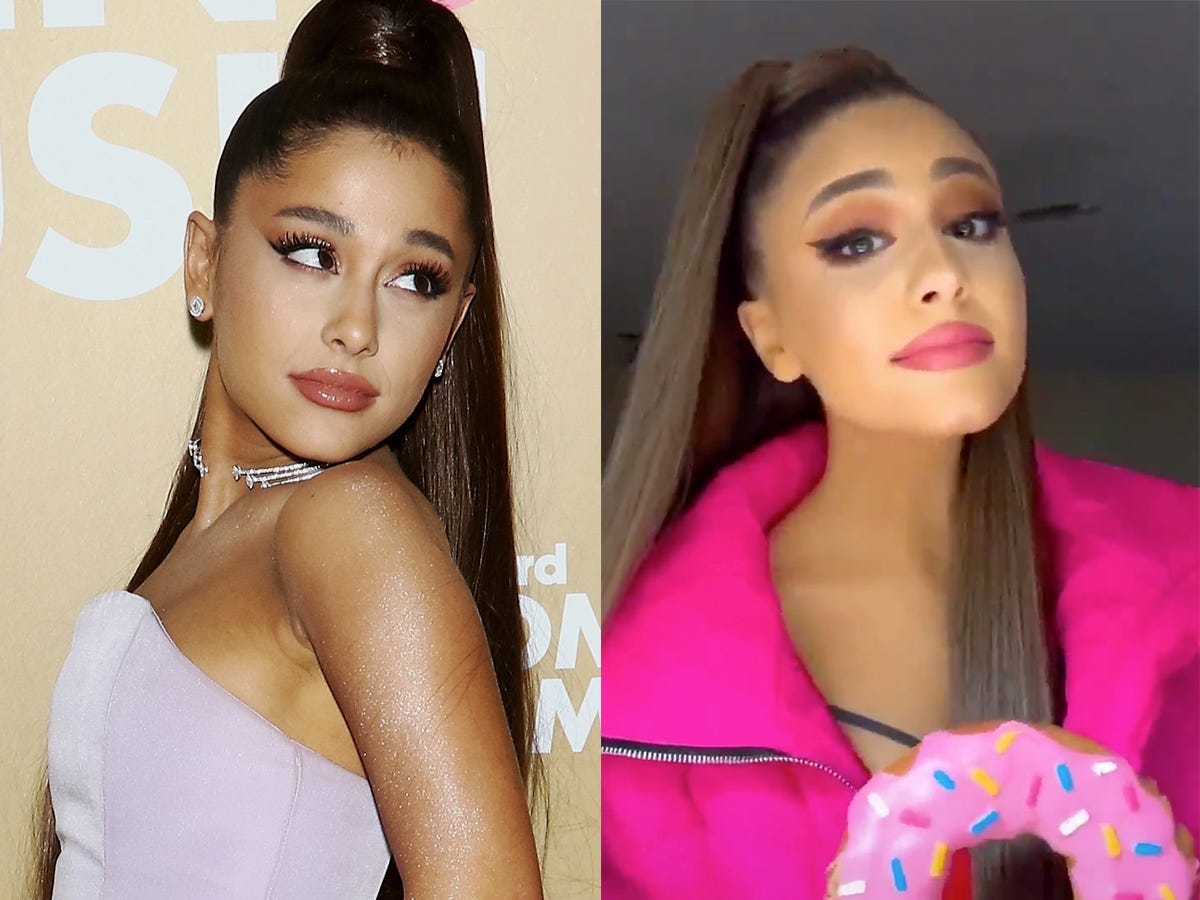
The perception gap
I went to my friend Adam’s poetry reading last week. Roughly two (?) hundred other people were in attendance. Being in such a large crowd felt grand and yet, that same day, I still caught myself feeling iffy about a video I made getting less than a thousand views.3 Why are we so desensitized to how much online perception we get?
Every Sunday, roughly 4000 people open an email I send.4 But the thought of having that many people in the same room listening to me speak makes my stomach turn. So how (and why) am I so comfortable with verbalizing my shower thoughts on the internet? Because we don’t internalize our reach, we grow more willing to share.

Wired co-founder Kevin Kelly once said: you only need 1000 true fans to make it as a creative. This week, at a party I had no business being at, I met a subscriber! By pure chance! It was a lovely reminder that I’m not screaming into the void.

The Performative Man killed perception
I’m wary of wearing my wired earphones in public nowadays (for fear of getting shamed for being performative). Really, it’s cause my headphones finally gave out.
In his 1981 book Simulacra and Simulation, French philosopher Jean Baudrillard dissects the performative man:5 the more our lives are informed by a filtered depiction of reality, the more value is attributed to the representation of reality rather than reality itself: we read to be seen reading. We go on lengthy runs to share our Strava data. We go on vacation only to post pictures telling others we went on vacation. Everything is performance. Baudrillard’s ideas make for good memes.
There’s no such thing as the “real you”
This inevitably complicates every display of '“authenticity,” which, according to Byung Chul-han, only really applied back in the 13th–18th centuries.6
In his book The Disappearance of Rituals, Han describes how pre-modern life was organized around a “civilizing process” — ie. elaborate codes of conduct that defined what was “proper” (courtesy, etiquette, ceremony).7 He argues that, this specific and structured performance of politeness created a distance between people, where the collapse of this distance makes way for what we now see as “authenticity.”
Being "authentic” is the absence of this performed politeness, but… are any of us following these rules of what’s proper? Han says:
“The society of authenticity is a performance society. All members perform themselves. All produce themselves. Everyone pays homage to the cult of the self, the worship of self in which everyone is his or her own priest.”
Bad taste is good taste
Having taste doesn’t mean having good taste. Taste is by definition subjective, so bad tastes exist as well!

In 1958, French philosopher Guy Debord8 introduced the concept of the dérive: an exercise of unstructured, improvised wandering through an urban landscape. This means following the loudest persistent sound you’re hearing or rolling a dice at every intersection. No plan. No thinking. Just vibes.
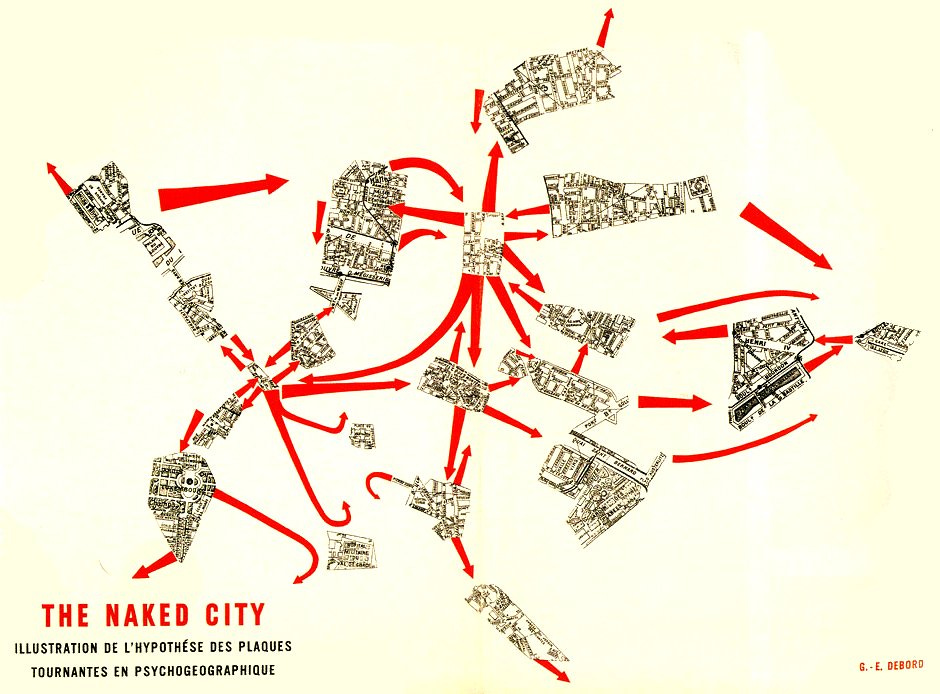
The point of the derive is to push participants to let go of the relationships they have with their social environment: a building is just a large slab of cement, a fire hydrant is just a pop of red. Debord believed that by familiarizing ourselves with the tactile, sensory parts of the world, rather than the intellectual relationships we have to them, we could find new meaning.
The same should go for taste!
It’s easy to forget that things, when considered outside of the algorithm, are just objects. When we stop fixating on what the algorithm says about wearing Margiela Tabis and start evaluating these things for face value, we let ourselves develop taste.
So go on an aimless walk. Really ask yourself why you like something!
Hello! If you’ve made it this far — thank you for joining me on my neo-luddite pilgrimage. If you’d like to support some of my more rogue ventures in cyber celibacy (typewriters, building a printing press… more to come), upgrade to paid! You’ll find treats sprinkled in your inbox <3
The irony of me saying this on Substack does not escape me…
Again, I am nothing if not hypocritical <3
In my defense, I spend weeks working on my videos about my experiments…
Okay, you got me, I’ve missed a few here and there
The Performative Man didn’t exist as a concept back in the 80s, but I’m sure some font of it was equally as pervasive during Baudrillard’s time.
I’m inferring this time period since Han is notorious for how unspecific he can be
I took an etiquette class once. Learned how to eat a banana with a fork and knife.
I’m aware that I seem to mostly reference French men. This is not a good look.
Love this! I’m sick of people talking online about how bad it is to be performative, when literally social media itself is performative by nature. Having “taste” is just a recycling of the same old version of trying to be seen and heard and thought of as “cool”. If you just do stuff you actually like, not for how it is perceived, the problem is solved :)
the act of posting online with the goal of being perceived for having taste in itself is performative. people should just like and talk about the things they like without trying to make it a thing