


A few weeks back, I went to Montana without my phone. I planned to document the trip with the camcorder I had recently discovered under my bed.
I did everything right: I tested the camera, charged backup batteries, and fiddled with the ISO/shutter speed to re-familiarize myself with the device. It was like riding a bike. I was doing great, until I realized I forgot about memory (my SD card was full).
With my card full, I had to think twice about what I wanted to film and retroactively deleted clips to free up space. Further, the exercise of holding this bulky recording device (with finite storage!) made me think: why is nostalgia always low-fidelity?
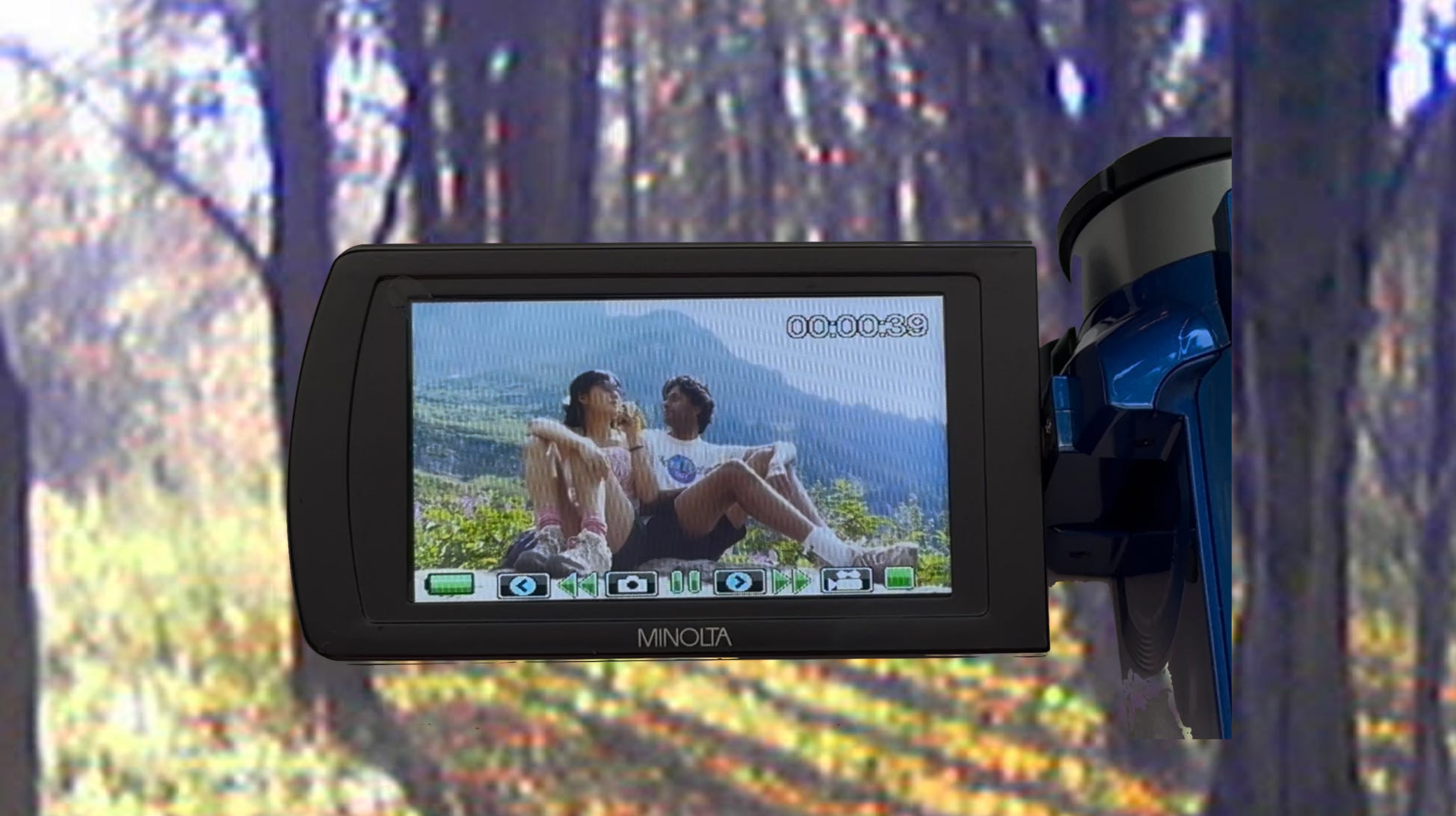
Why grainy footage feels more “authentic”
Digicam and VHS-tape videos seem to be dominating the internet.1 Used as a sort-of visual literary device, shaky and slightly pixelated footage has become a shorthand for nostalgia. Why?
The most obvious answer would be the fact that we (or anyone older than 25)2 have only experienced the past through these lo-fi mediums. Our parents filmed our home videos on camcorders; we documented our adolescence with flip phone cameras; it only makes sense that poorly rendered footage triggers a pavlovian nostalgia. But I think our fascination with this format goes a bit deeper than just emulating the past.
The grain pulls us out of the image and into the moment. When iPhone footage is the de facto path of least resistance, the choice to use a camcorder is an explicit recognition of this archaic form.
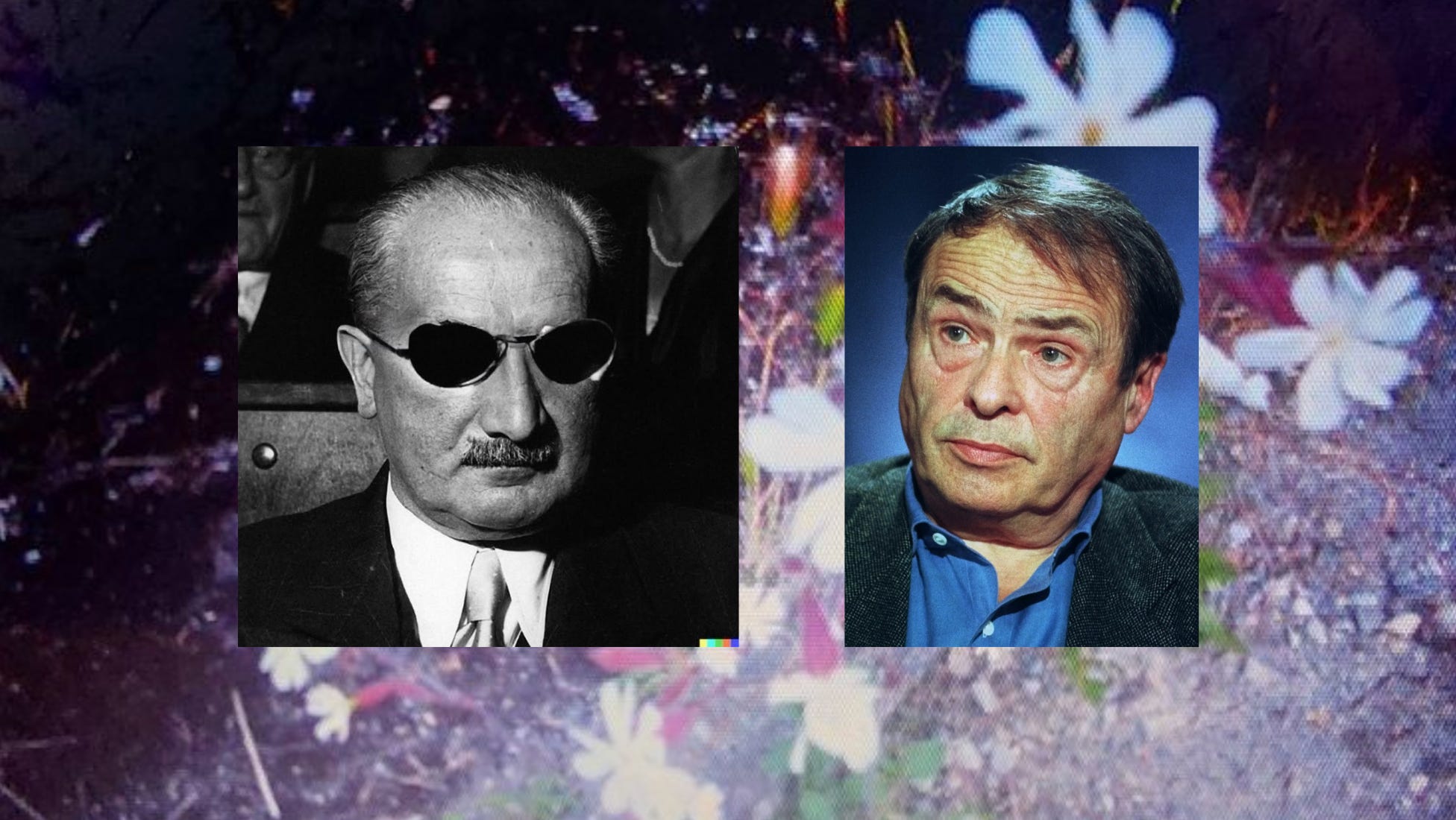
German philosopher3 Martin Heidegger, in his famous 1927 essay Being and Time, investigates our relationship with our everyday tools and how our mundane use of them helps us understand the world in a way that detached observation cannot. He gives the famous example of a hammer’s two states: zuhanden (ready-to-hand) and orhanden (present-at-hand).
“Ready-to-hand” is when a tool becomes invisible because it’s working (a nail being hammered), and “present-at-hand” is when a tool comes into our explicit awareness (hammer’s head falls off). To Heidegger, the tension between these two states reveals an important distinction between our intellectual understanding of reality and our actual lived experience.
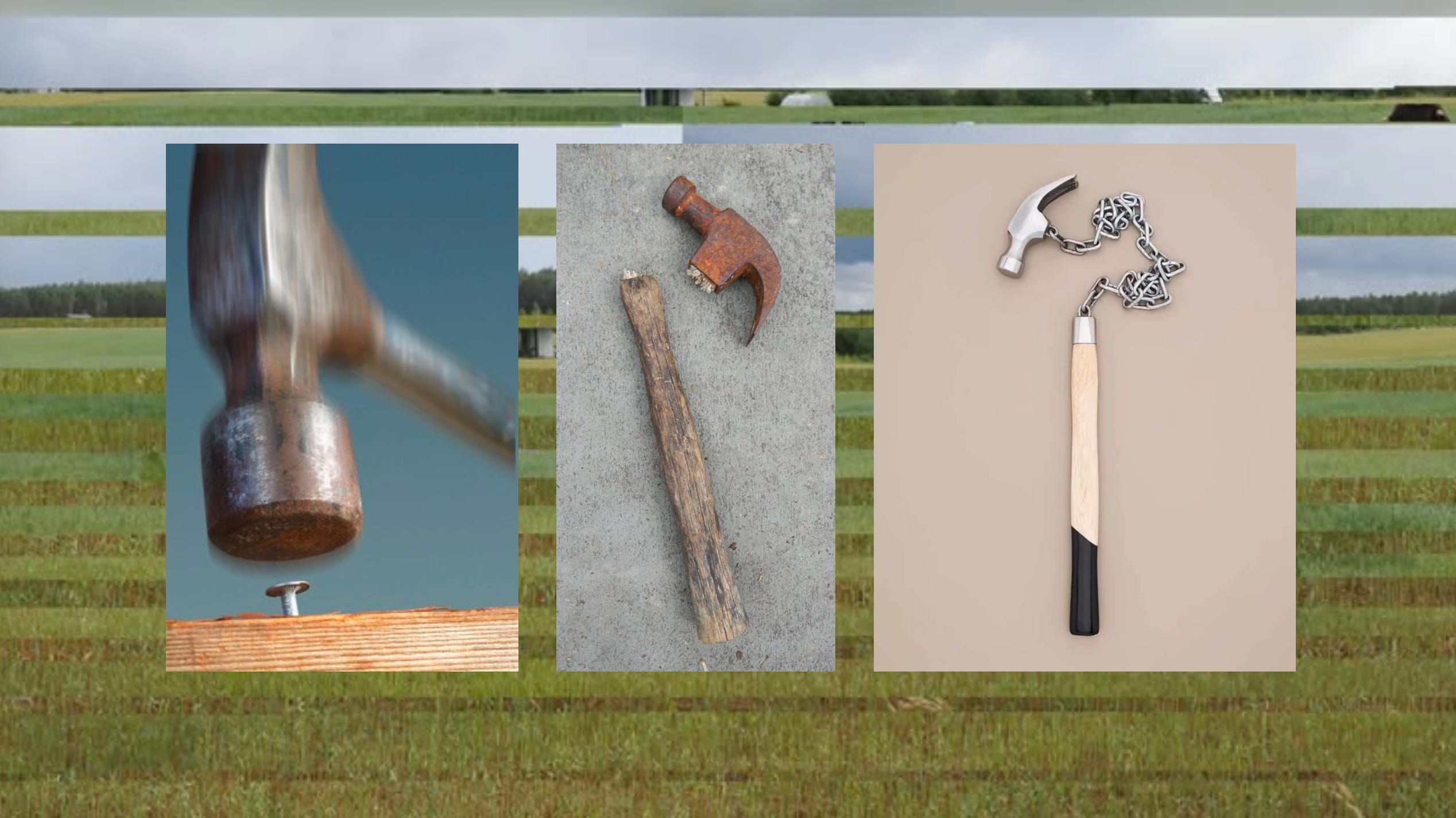
In the context of “analog”4 film, material substrate (noise, dropout, tracking distortion, chroma bleed) makes the camera visible where it’s typically invisible in iPhone footage.5 It shifts the camera from being “ready-to-hand” to being “present-at-hand”, reminding us to consider the moment at which someone is filming the content rather than taking in the content at face value.
As such, these unintentional characteristics of fast-degrading footage become intentional literary devices we use to signal authenticity. Much like the way we employ spelling errors to differentiate our writing from that generated by AI or use serif-fonts to inject a sense of “humanity” into an interface (Kyle Chayka’s The New Yorker column on low-fi aesthetics touches on this).
WIRED also did a deep dive on this and I simply must share my favorite excerpt:
“Even the US State Department has returned to using Times New Roman after Secretary of State Marco Rubio decried Calibri as “informal,” pegging the department’s adoption of the sans serif typeface on some wider, Biden-era DEI initiative.”
The ritual of photography
Before it photography was accessible, it was a ritual.
The experience of whipping out a camera to document something was —in today’s terms— “friction-ful”: it took time to pull out a hefty device, adjust it’s focus and aperture before hitting record… subjects of an image had to hold still for long exposures. Photographic documentation was also expensive: even after the introduction of the digital camera, filming minutes worth of footage was five times more expensive in the 80s than today.6
A few years ago, I wrote this essay for Its Nice That about the Beijing Silvermine — an “archive of over a million negatives salvaged over the last 14 years from a recycling plant on the edge of Beijing.”7 The images from the archive were mostly from the aftermath of the cultural revolution (around the 70s and 80s), exhibiting almost all the characteristics I mentioned above. That reminded me of a quote from French sociologist Pierre Bourdieu:
“…the most trivial photograph expresses, apart from the explicit intentions of the photographer, the system of schemes of perception, thought and appreciation common to a whole group” — Pierre Bourdieu, Photography: A Middle-Brow Art

In his 1996 essay “Photography: A Middle-Brow Art,” Bourdieu investigates the politics of choosing what (or how) to photograph. He fixates on the ritual of the family portrait and asks: who is taking these photos? during what occasions? following what conventions? why?
Beyond grain, home videos (or personal photographs) also had a distinct visual language: we would stand in front of monuments with a smile, pose in single file with everyone looking at the camera (something apparently “taboo” on Instagram). We see this language flexed throughout the Silvermine archive.
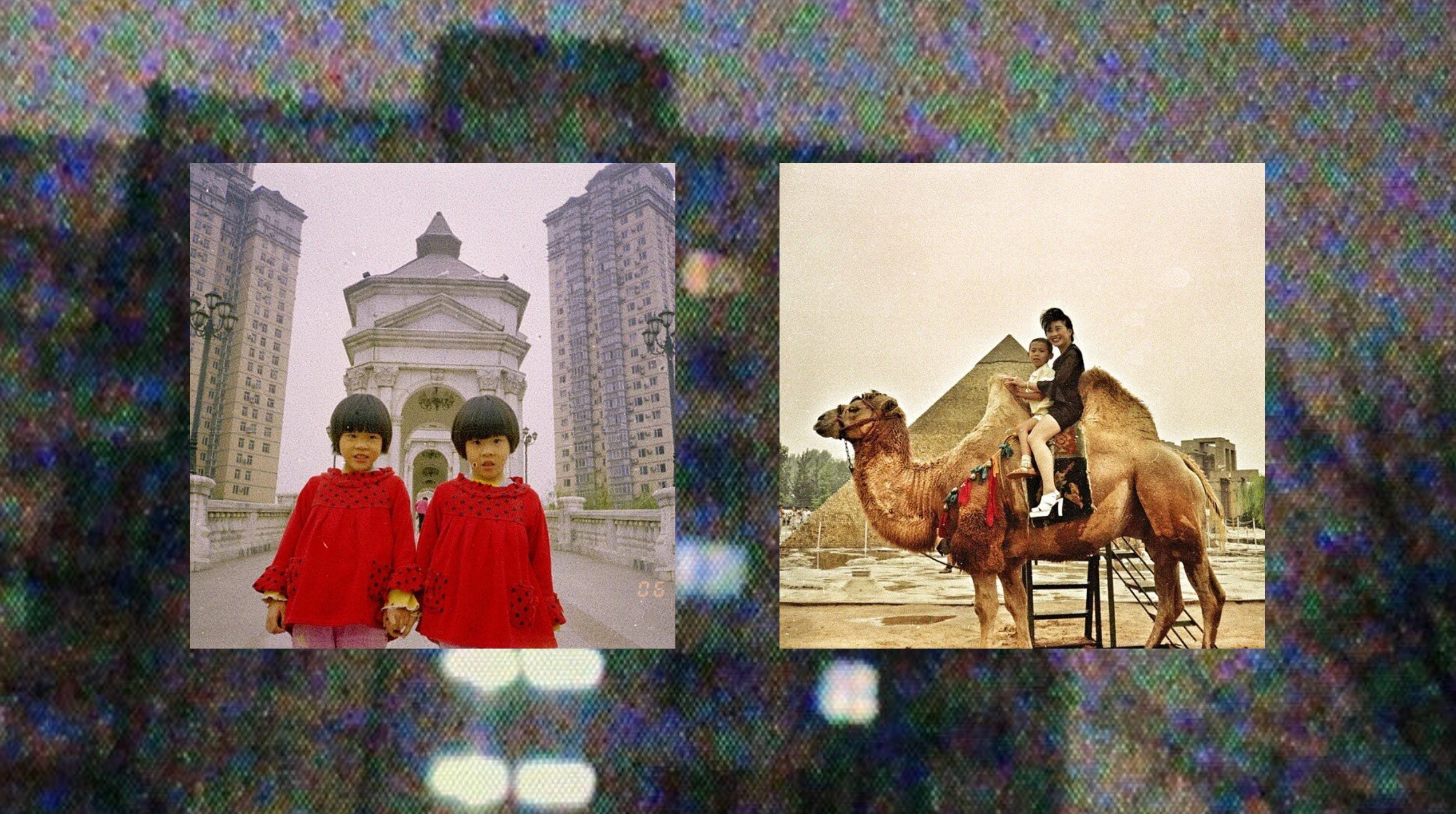
To the extent that everything around us is infinitely “photograph-able,” Bourdieu insists that (citing Nietzsche: “the artist chooses his subjects. It is his way of praising”) photography consecrates its subjects. The logic compelling the photographer to select and pose said subject, Bourdieu adds, is governed by an invisible social order.
Camcorders aren’t just an “aesthetic”
At risk of over-intellectualizing what may be another internet trend, I’m convinced that Bourdieu’s study of the family portrait explains why shaky, pixelated camcorder videos (eg. birthday cakes, steps down stairs) are so resonant to us today. They reflect a time when nothing was filmed by accident: scarcity did the consecration for us, so whatever made it onto tape was, by definition, already judged worth praising.


“[These images] are not historically correct, because they only focus on the good side of life,” Thomas Sauvin, the curator of the Beijing Silvermine, told me.
…but is anything we post on Instagram “historically correct”?8
Hello! If you’ve made it this far — thank you for joining me on my neo-luddite pilgrimage. If you’d like to support some of my more rogue ventures in cyber celibacy (typewriters, building a printing press… more to come), upgrade to paid! You’ll find treats sprinkled in your inbox <3
I’ve always wondered what percent of those posts actually used an old camera vs. a filter.
My generation? Gen-Z…?
His work was central to the development of phenomenology, hermeneutics, and existentialism.
Quotes cause digicams are actually…. digital!
There’s a lot of unpack here about how there are “iphone accents too” and how what we detect as signs of a recording tool changes with time.
Average cost of tape in the 80s was around $0.19/min (inflation-adjusted). Now with memory cards it’s $0.04/min.
As listed on their website
I prefer “biblically accurate,” actually.
i absolutely loved this. one of my favorites of urs