


My friend recently told me that the Hello Kitty sewing machine he got as a child is still the best piece of technology he owns. 25 years of wear and no scratches or atrophying battery life. I thought, wow! Then I paused. Why am I not surprised?
The tech we use today is built for obsolescence. A new iPhone launches every few months. We renew our hardware every few years. Batteries die. Charging ports change. Life goes on.
The world of (vintage) toy technology, however, tells a different story.
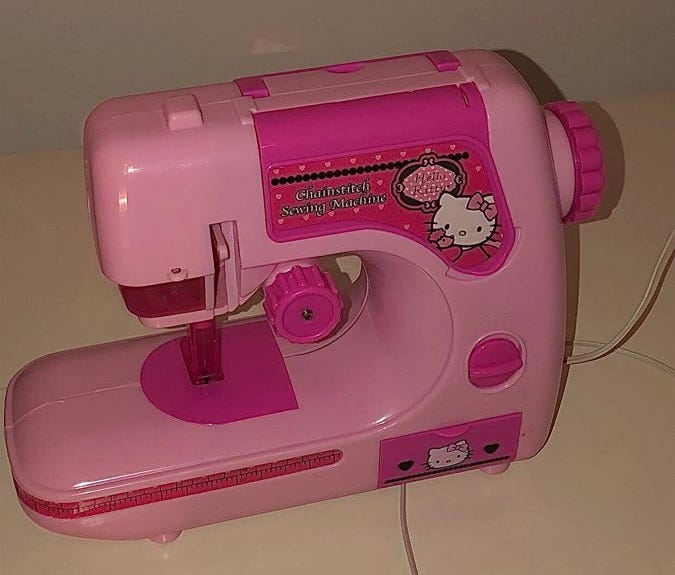
When I say “toys,” I don’t just mean plushies and play-pretend kitchens. I mean fully operational —often educational— gadgets made for kids: Hello Kitty sewing machines, Barbie play phones, etc. These pieces of hardware were built to serve a single purpose. They ran mechanically, like a stripped back iteration of their “real life” versions, and banked on the fickle interests of toddlers to turn a profit.
In many unsuspecting ways, toy tech narrowly escapes the plights of capitalism1 to demonstrate that tech can be built to last. Hear me out.
Build the bare minimum
According to legendary Game Boy creator Gunpei Yokoi, mass producing something of quality is possible. Our issue is that we often conflate quality with embellishment.
In a rare interview on shmuplations.com (a fabulous repository of Japanese game developer translations), Yokoi insists that the bells and whistles of modern technology can get in the way of good gameplay. The essence of a game is the competition and cognitive challenge, not the visual experience: if you want flashy graphics, go watch a movie. Don’t play with your Game Boy.

Why Game Boys were designed to be “low tech”
Yokoi deliberately designed Game Boys to have a monochrome display, even though Nintendo heavily pushed for color. This decision was both ideological and pragmatic: monochrome displays helped conserve battery life and were easier to produce. “Once you start playing the game, the colors aren’t important,” Yokoi said, “you get drawn, mentally, into the world of the game.”
It seems, imagination is key to an immersive experience. And the pursuit of graphical realism in game design, to Yokoi, is no different from the (admittedly dated) analogy of the eroticism evoked in movies “when a woman leaves some skin covered… [because] each person can project their own conception of “beautiful” onto them.” Why explain away all the details, when building your own world is part of the fun?
The point of a game is the thrill of winning. Everything else is just a distraction. Yokoi explains:“we live in a world of information… when you see that drawing of the snowman, the mind knows this color has to be white.” He calls this approach Lateral Thinking with Withered** Technology. The idea goes: power an experience with something accessible and long lasting. Color the experience with community.
…let the idea itself shine.
** ‘Withered technologies’ are cheap, abundant, stubborn pieces of hardware (AA batteries, aluminum cans), often overlooked for their limited capacity.
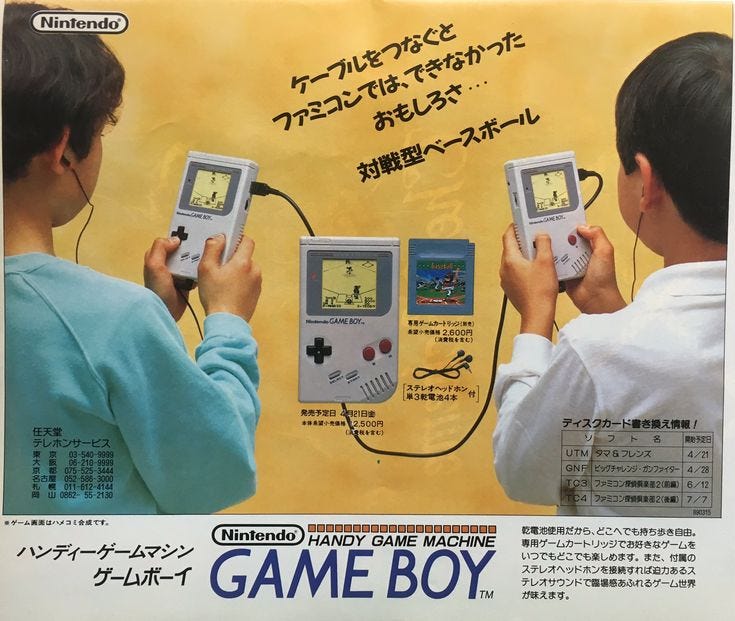
It’s all about doing more with less. Since its launch in 1989, Game Boy has sold over 119 million units and reigned as Nintendo’s hottest game for nearly two decades (despite being built with a processor from the 70s). Just like that, Yokoi established a simple philosophy that would later inspire a decade of toy making trends: “hardware design isn’t about making the most powerful thing you can.”2
Commercial technology is built to break
I’ve always assumed that if a piece of technology is a couple years old, it will not work.
That’s true for majority of the hardware manufactured in the past decade or so. But not for Yokoi’s Game Boy: today, the Game Boy Pocket from 1996 still works with off-the-shelf AA batteries. 30 full years after its launch.
If we were capable of building things that last… what changed? The 2023 bankruptcy of Instant Pot says it all: it’s never enough to build a single product that lasts. You need constant, rolling demand. Selling a perfect device kills the golden goose.

We still don’t have the Right to Repair
Advocating for the right to fix your own tech somehow feels dated, even though the status quo remains largely the same. We void warranties when we choose cheaper hardware replacements. We risk everything when we opt out of Apple Care. We’re3 barred from tinkering with our tech because fixing it stops us from upgrading.
Did you know Casey Neistat rose to fame for his video on the right to repair?
Only five out of fifty states in the US have passed Right To Repair legislation. There’s good news though. As of a few days ago, efforts to kill Colorado’s Right To Repair bill were vanquished.
We used to have perfect products
Apple’s Powerbook G4 has a removable battery, interchangeable RAM, and all the ports you’d need. Imagine replacing only one part of a laptop instead of the whole.
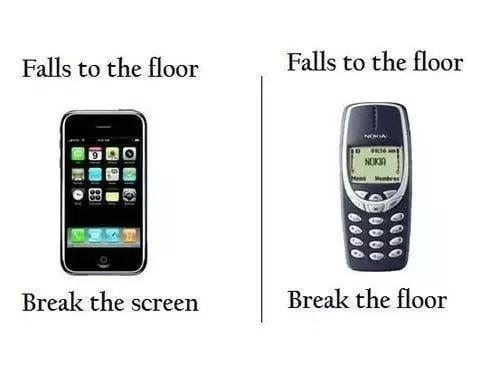
We sent someone to the moon with less computing power than a calculator
Too often are we sold on things we don’t need. The same way it’s ludicrous to vibe-code your own spellcheck or wear GORE-TEX shells for east coast drizzle, constantly upgrading our devices is excessive. Do your snaps really need to be in 4K? Do you need a 2,000,000:1 contrast ratio (whatever that means)? What do you actually need?
Toy tech as the underdog
Toys weren’t exactly built to last, but they weren’t built to be constantly replaced either. Sanrio didn’t plan for consumers to constant upgrade their Hello Kitty sewing machines. Bandai made money from people collecting Tamagotchis rather than wearing one out.
Why Hello Kitty sewing machines don’t break
The simple fact that toy tech didn’t try to be “the real thing” inadvertently protected it from the intellectual property laws that “real tech” is subject to.4 Because the notion of using a Hello Kitty sewing machine to properly mend clothes (as an adult) seemed ludicrous, manufacturers didn’t build toy tech for obsolesce. They’re, instead, actually built for repair: toy tech lasts longer because they’re mostly mechanical, not digital.
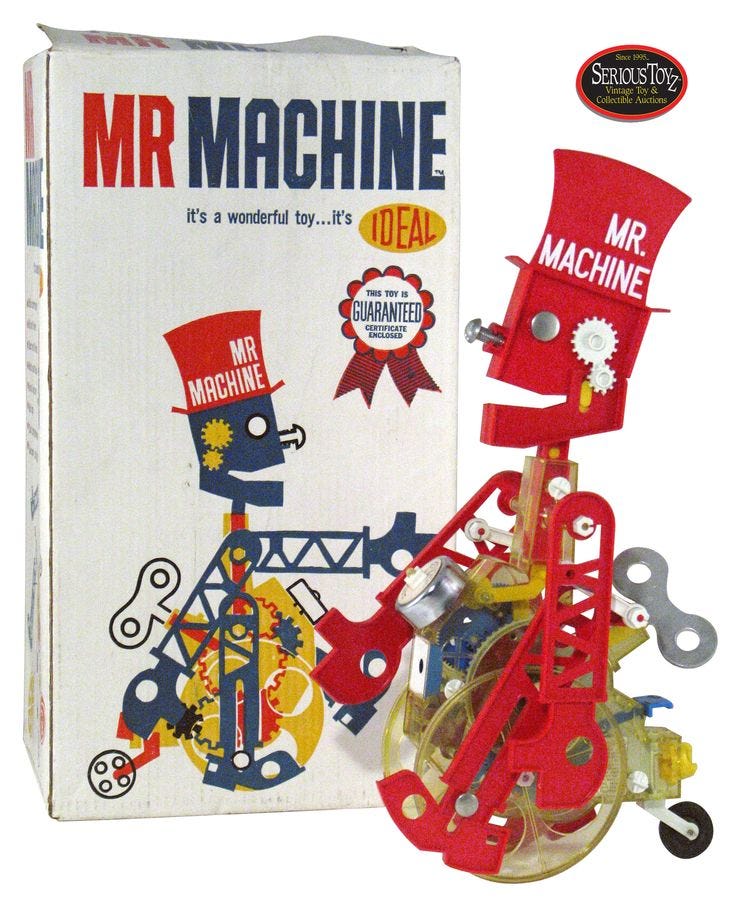
There’s no single point of failure!
Mechanical devices are built as distributed systems where each part performs a siloed, specific job. If something shifts, the overall system can still be functional (a music box with chipped gears can still play, albeit roughly). Digital systems, on the other hand, are built like a set of dominoes. When one fails, the whole system falls apart. This makes everything a single point of failure: you’re sh*t out of luck if your iPad’s touchscreen stops working.


Shop in the children’s section!!!
This is all to say — we should really consider whether the bells and whistles (computing power, camera resolution, etc.) of all our gadgets are actually necessary. ONLY BECAUSE the cheaper and, often times, more durable alternative (toys) may work just fine for what we actually need. Of course, this isn’t to say toys weren’t subject to other capitalistic forces —for what it’s worth, my first iPhone died long before my first Tamagotchi).
Let this rant be a friendly reminder that we don’t have to settle for sh*t tech.
There is merit in tinkering with your own tools! Learn how to fix your own things! Voiding your Apple Care shouldn’t be the end of the world!
Hello! If you’ve made it this far — thank you for joining me on my neo-luddite pilgrimage. If you’d like to support some of my more rogue ventures in cyber celibacy (typewriters, building a printing press… more to come), upgrade to paid! You’ll find treats sprinkled in your inbox <3
Capitalism as applied to tech for commercial use
Tamagotchis were developed when Japan’s economic bubble burst in 1992. Bandai, the toy’s manufacturer wanted to produce something that had market value even in the harshest economic times.
Outside of personal devices, farmers get THE short end of the stick
Dear god my Dyson vacuum actually sucks SO bad