


Yesterday, someone pitched me “a personal intelligence that proactively sends you reminders to help you live a more intentional life.” I giggled. Isn’t that the opposite of intentional? If all our decisions are made (and motivated) by some external entity, void of any personal agency, where’s the intent?
Starting this week, I’m going through marathon training without any tech. I want to learn to listen to my body again: let motivation come internally rather than externally.
This means getting rid of…
Fitbits or smart watches
Any fitness apps (Strava, Nike Run, Apple’s Health app)
Oura rings
If I cut out all the noise (metrics) and just listened to my own body, what will I hear?
We’ve grown so dependent on our devices, Wired compared our relationship with tech to late psychologist Daniel Wegner’s 1985 theory on Transactive Memory.1 I need my alarm clock to wake up, reminders to take meds on time, a health app to track my exercise. We’ve delegated all our basic functions to our phones. It’s time we reclaim it.
Every aspect of my life is already being tracked
Like artist Richard Serra once said: “if something is free, then you’re the product.” 2
We’re all more than aware that every aspect of our existence is being tracked. Our is data sold on multiple marketplaces; our attention is occupied by companies who pay for airtime; we’re no longer in denial.
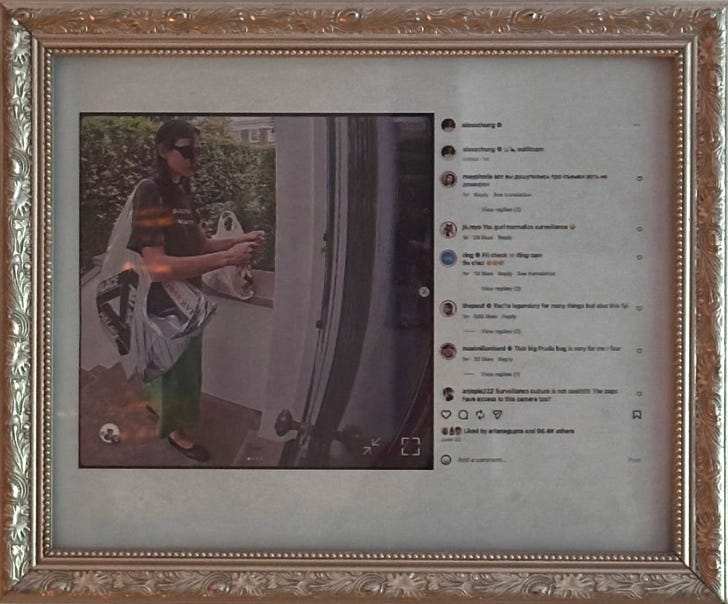
Over these past few months, Oura thought it would be cute to share the bio-data of its members to hop on the Knicks finals marketing bandwagon. Alexa Chung anointed “surveillance chic” as the latest IG trend (kate lindsay of Embedded published a fab take on this). Everyone’s following Spotify’s footsteps, albeit tastelessly.
It’s simple: platforms/devices/apps are designed to keep us hooked while they mine our data — sort of like an attention hamster wheel. So why are we still opting in?
The fake objectivity of data-based “optimization”
We’re sold on data’s capacity to optimize our lives. It keeps us accountable. Because, apparently, our intuition clouds objectivity. Numbers don’t lie! Right?
Between epistemic biases and data manipulation, there’s actually a lot of room for numbers to mislead.3 If you think about it, how is Oura calculating its “readiness scores”? How is Apple’s fitness app determining what is a “normal” step count? Are you evaluating your data against your own progress or that of the average?
Bottomline: it feels dystopian to let an app tell you how to feel. A friend recently walked me through his theory that Oura intentionally lowers readiness scores to keep users hooked on monitoring their sleep. It reminded me of that scene in Inventing Anna, where scam artist Anna Delvey’s fake “techfluencer” boyfriend pitched Big Sleep. Delvey’s then-real life partner, Hunter Lee Soik, was actually pushing a startup that tracks your dreams… I’m surprised it didn’t actually take off (considering how many similar projects have since gone viral).

The anxiety that comes with showing my Oura ring that I slept well could itself ruin my sleep quality. I wonder how the #quantifiedself bros4 are holding up these days.
Optimizing for a metric doesn’t solve the issue
We love gamifying our health. We love assigning arbitrary numbers to things and then compare them. The genius of Strava is repurposing perception for accountability. It pushes you to run, not for yourself, but for others. Our obsession with slashing our screen time is no different.
My friend Elana writes for Wired’s User Behavior column (she profiles celebrities’ digital diets). She told me:
“People have strong feelings about their screen time, either a sense of pride or embarrassment. It’s come to mean something about you: It’s a proxy for self-discipline, intellectual curiosity, and worldliness—all of which, we’ve apparently decided, are inversely correlated with time spent on your phone.”
First of all, most people only consider time spent on a phone screen time (laptops and tv screens for some reason don’t count). Second, the metric gives no weight to what we actually do on our phones. Cutting the time spent on your phone doesn’t guarantee time spent reading, exercising, or anything that’s objectively healthier.


Elana then added:
“When I ask people about their screen time (in User Behavior interviews and otherwise), they almost always feel the need to tell me they wish it was lower. At this point, I can’t tell if that’s true or just something you’re supposed to say.”
All this feels like putting scotch tape on a pipe leak.5 We’re not getting to the core of the issue. I return to Ian Bogost’s essay on being anti-screen time now and again. He insists that “screen time is not a metric to optimize downward” because it “is a systemic issue, so an individual response—your screen-time monitoring, your screen-time mitigation—will likely be of little use.”
Learning to lean on my intuition
Dazed recently published an essay about intuitive-based fitness as the counter-trend to all forms of (presumably data-driven) “-maxxing.” Using terms like “wellness anarchist,” the article anchors the rejection of over-optimization in the rise of everything from reiki and qi gong to somatic healing and spinal energetics.
… but what if (crazy) I simply want to re-familiarize myself with my body?
“I should” vs “I feel”
I’ve gotten so used to navigating my life with “I should…” statements that I’ve forgotten about how “I feel…” To my point last week about whimsy, I’ve lost the ability to do things on a whim, based on intuition rather than rationality. Perhaps learning about why I feel the way I do could help.
My buddy Adrian is a writer and (newly certified!) yoga instructor. A few weeks back, he told me about his idea for a class on learning to build a relationship with our body. That’ll be a good place to start.
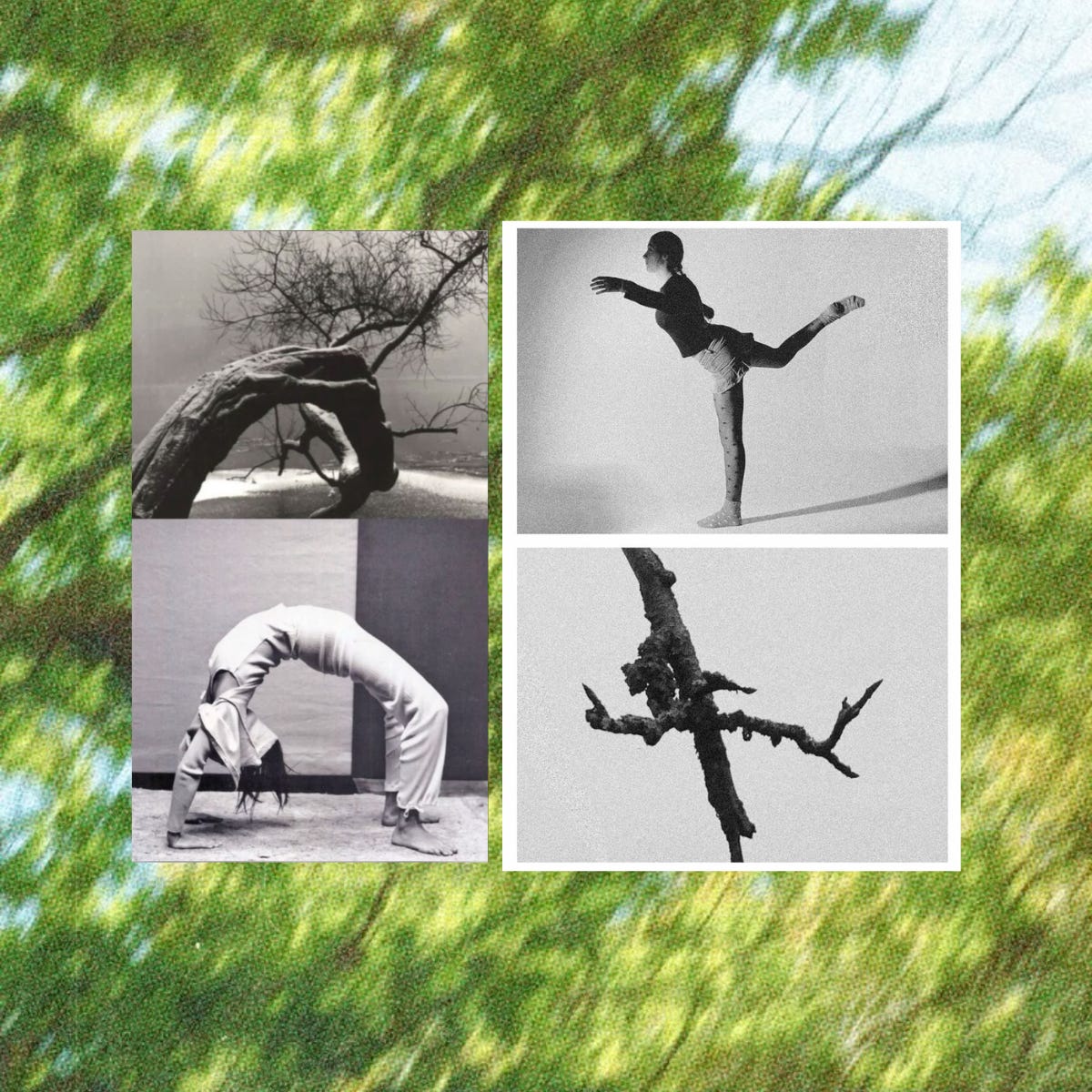
What gives you chills?
Radio Lab’s segment last week covered “chills” (more archaically known as the “Holy Whisper”). Turns out, where animals get chills as a fight or flight response, humans get it when they experience something that tests the limits of a condition.6 In other words, we get chills when a fundamental belief (all beliefs, not just ideological) we have is challenged.
So much of my motivation for running comes from knowing I ran either longer or faster than my previous attempts. Through obsessing over fitness tracking apps as I run, I’ve grown accustomed to instant feedback (and therefore gratification). I’m not worried, though, about knowing my limits. I have a feeling (haha) my body’s going to let me know when I break a personal record.
I do get runner’s high pretty easily, but that’s probably because my body’s just shocked that I finally got off the couch.
Noticing will take time
As I embark on this journey, I’m reminded of Jenny Oddell’s birding anecdote in How to Do Nothing. Learning to notice the nuances between different bird calls, she says, takes time and a lot of care.
“Context is what appears when you hold your attention open for long enough; the longer you hold it, the more context appears.” — Jenny Oddell, The Paris Review
Maybe learning to reclaim my body will be like learning how to bird watch.7 It’ll take time to hear and understand my body’s signals (or calls).
Stay tuned for updates! If you have tips and tricks, lmk. I need all the help I can get :)
Hello! If you’ve made it this far — thank you for joining me on my neo-luddite pilgrimage. If you’d like to support some of my more rogue ventures in cyber celibacy (typewriters, building a printing press… more to come), upgrade to paid! You’ll find treats sprinkled in your inbox <3
When “long-term couples store information in one another and their collective pool functions as something of a joint memory card”
Serra said this in the 70s! It’s almost been half a century since…
Charles Wheelan’s Naked Statistics: Stripping the Dread From the Data is a fun starting point if you wanted to dive into this rabbit hole
#quantifiedself is a movement where members track every aspect of their lives with technology to “gain self-knowledge through numbers.” A deeper dive to come!
For what it’s worth, I did once mount my TV with tape for a year (it’s still there)
Hearing that phrase itself gave me chills.
The Atlantic recently reported on the rising popularity of birding amongst Gen-Z, comparing it to meditation and Pokemon Go.
I enjoy your writing so much. It hits a sweet spot between research, analysis and a kind of softness or gentleness I'd expect to see in poetry. Thanks for keeping it in front of paywalls, too!
ironically, 26.2 miles is also an arbitrary metric