


Seems like everyone on Instagram has decided to post pictures from #2016 this week.
The Tumblr aesthetic assaulting my feed this week brought me back to a simpler time: pastel goths, Twilight… vegans. Specifically vegans in the font of milking almonds, dreamcatchers, and Goop’s first (mainstream) incarnation. The font of veganism that promised dewy skin, clear skies, and unshakable moral integrity.

Having lived through the rise and fall of this cult movement, it’s hard not to compare the intensity of veganism with the momentum of today’s anti-tech renaissance (or, in more algorithmically-friendly terms, ‘the analog lifestyle’).1
MP3 players are no less an accessory than oat milk lattes. Quitting Spotify is as much a statement as wearing a faux fur coat that says ‘Meat Is Murder.’ The term ‘luddite’ rolls off the tongue with the same derogatory tang as calling someone ‘vegan.’ So, is this analog thing a fad? is it here to stay? is it just reserved for the upper class?
Both Luddism and Veganism* hold a distinctly aesthetic appeal, but the decision to renounce something so key to the fabric of society is usually motivated by something beyond aesthetics. Moral conviction? perhaps. A desire to be on trend? Absolutely.
*Gentle reminder that veganism is deeply rooted in ancient Indian and West African cultures2
Veganism helps us be more critical of Luddism
When asking someone why they’re vegan, you’re usually given one of three answers:
Climate discourse (when we still had one)
Animal rights
Health (pre-pyramid fiasco)
Similarly, the push to go offline* is driven by a desire to…
Divest from big tech
Improve mental health
Optimize productivity
The parallels between the two go further. They’re both counter-cultural movements with roots concerning both personal health and morality; they’ve inspired similar criticisms of their aesthetic presence online; while historically the norm for demographics of all kinds (particularly low-income populations), their rising popularity has re-branded the respective practices to an upper-class status symbol.
I wonder, with their striking similarities, could the fate of veganism help us more critically engage with the emergent anti-tech movement? After all, veganism —in its ‘trendiest’ form— seems to have run its course a decade earlier.

I feel as though I’ve already lived through the ‘trend cycle’ of the analog lifestyle. Jan 1st was when everyone was preaching an analog life. Jan 17th is when the quantity of criticisms of the analog-life officially surpassed analog-life content itself.
*Distinct from veganism, there aren’t hard lines on what types of tech can/can’t be used in neo-luddism. Divesting from technology is its driving ethos. How folks interpret it varies.
Quitting as a privilege
A few months back, Adam Aleksic (Etymology Nerd) wrote about why we should stay on our phones, how the dumbphone phenomenon seems to be reserved for the “educated, upper-to-upper middle class, and endearingly pretentious,” and why this desire to disconnect is a form of “reality privilege.” His statement that: “a blue-collar single mother working two jobs is not going to have the time or energy to seek out in-person events or alternative forms of media” split some hairs in the comments section — is TikTok really the fastest (and more accessible) form of stress relief?
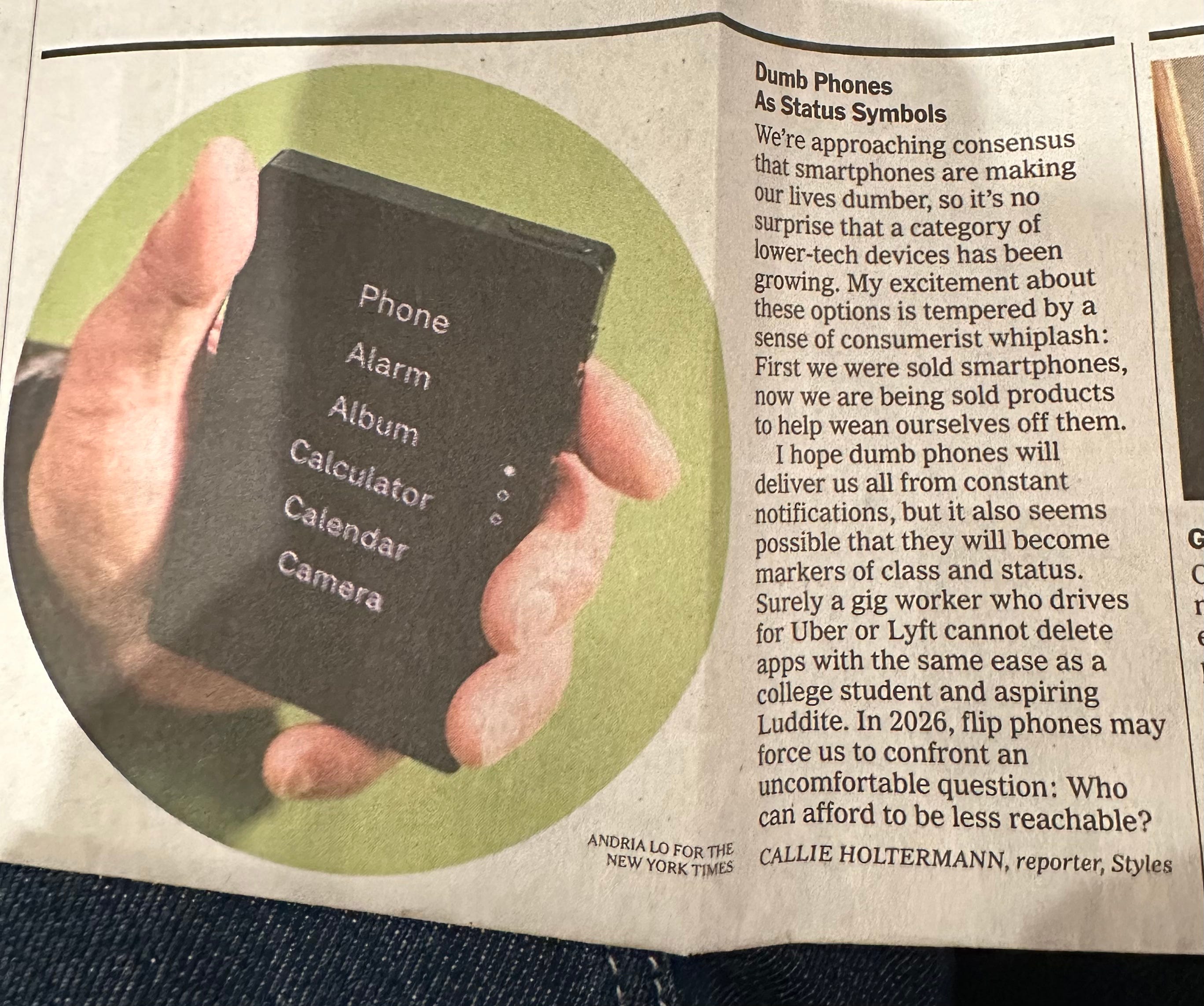
As the 2025 Common Sense Census reports, children from lower-income households are spending nearly twice as much time with screens as those from higher-income households, mainly because parents don’t have the time or means find quality alternatives (eg. childcare, extracurriculars).3 The same census also reported greater tech/media literacy among higher-income parents, where higher-income individuals are 13% more likely to be “nervous about their screen time.”
Acquiring the tools that help ease this process can incur a premium. Yes, for children, the options are limited. For adults, attending ‘analog’ events and purchasing tech alternatives also require time and money. Even the activation energy required to divest from smartphones/social media/digital life is significant. To Aleksic’s credit, reclaiming your relationship with tech has a steep learning curve and not everyone has the bandwidth to give it a go.
BUT we know that doomscrolling only temporarily regulates our nervous system and doesn’t actually help relieve stress.4 We’ve ALSO been seeing its long term effects. Judging by Aleksic’s comments section, there’s a real appetite for change — even if it’s learning to spend less time online without purchasing a Dumbphone.
Could this impulse to scroll for entertainment/stress relief come more from a place of convenience rather than cost?5
The cost of logging off
The relentless pursuit of technological development has eroded our right to log off.
Just a decade ago, we believed that the internet had the capacity to democratize information, so we pursued technological access at all costs (see Facebook’s Free Basics program and its humanitarian ramifications). The focus was on connectivity, not regulation.
Since then, the mass production of cell phones has dramatically lowered the cost of being online just as public infrastructure started swapping out phone booths for wifi stands.6 In turn, being accessible at all times became the norm and logging off developed a cost: job opportunities are missed, working relationships suffer, and small businesses abstaining from Instagram take hits on their traffic.

You need the internet to get a job
Would your boss let you go off the grid? Most jobs are pivoting to digital recruiting, requiring job applications and interviews to be conducted entirely online. A Pew Research report found that lower-education/lower-income job seekers leaned more heavily on smartphones to apply for jobs and, according to Indeed’s Hiring Lab, 79% of job vacancies came from “online job boards” in 2024. Even after getting a job, work-life boundaries are often blurred: employers need to be able to reach and track their employees, gig workers need to be alert of their marketplaces.
The right of disconnect legislation is taking its sweet time — the legal push is gaining some momentum in Europe, with some efforts in the states following suit, but there’s yet to be any significant regulation.

The literal cost of detoxing
Perhaps the price tag of the tech alternatives currently taking Instagram ads by storm is what’s contributing to the seemingly frivolous branding of the anti-tech movement.
Comparable to the first wave of vegan-oriented wellness retreats and specialty products,7 digital detox retreats are going for hundreds of dollars (The Offline Club offers a €685 detox for 72 hours), Dumbphones average between $200-$400, apps that focus on either limiting screen time or encouraging in-person connectivity bill users on a subscription model, and retro-revival gadgets made to be compatible with modern technology can go for over thousands.
But this is also where we have the most influence over the cost of this lifestyle change. Can you reclaim your relationship with tech without having to pay for all these tools?
If you’re willing to pay for it, there will always be a more expensive option to help you wean off your tech. That doesn’t mean you have to drop a bag to log on less!
It’s fashionable and (potentially) ephemeral
In Rachel Sugar’s latest New York Magazine piece on How Veganism Got Cooked, she outlined the swift rise and fall of veganism. Remember when being vegan was a prerequisite for celebrity in Hollywood?
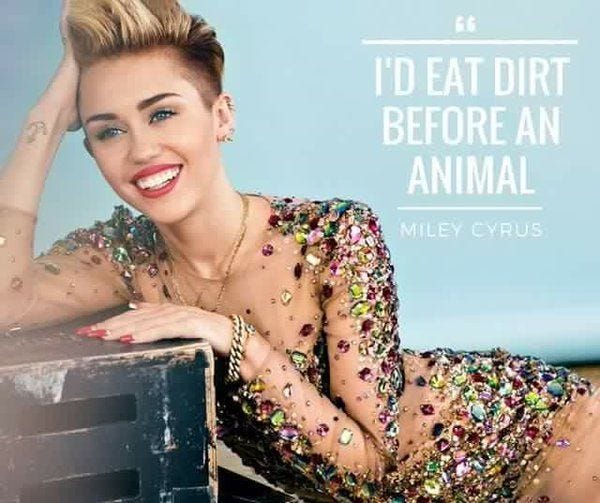
In the movement’s peak, everyone from Beyoncé to Jack Dorsey pledged to be vegan, started lines of alternative milks, and invested in lab-grown meat. There was no contest to the cause back then. To be vegan was to be a good person.
But with changing sociopolitical climates (amidst a cocktail of other frankly hilarious cultural shifts *cough* pyramid), the vegan hype started to lose traction and meat slowly made its comeback: Dorsey went from being vegan to Paleo. Lizzo went from praising plants to worshipping protein. The wind has apparently changed.
“One by one, celebrity vegans announced that, actually, they felt better eating meat. “I found that animal proteins helped me to have more energy, lose weight, and helped with my mental fog,” explained Lizzo* in late 2024, summing up the mood.”
Institutions that restructured to support the vegan agenda returned to its roots:
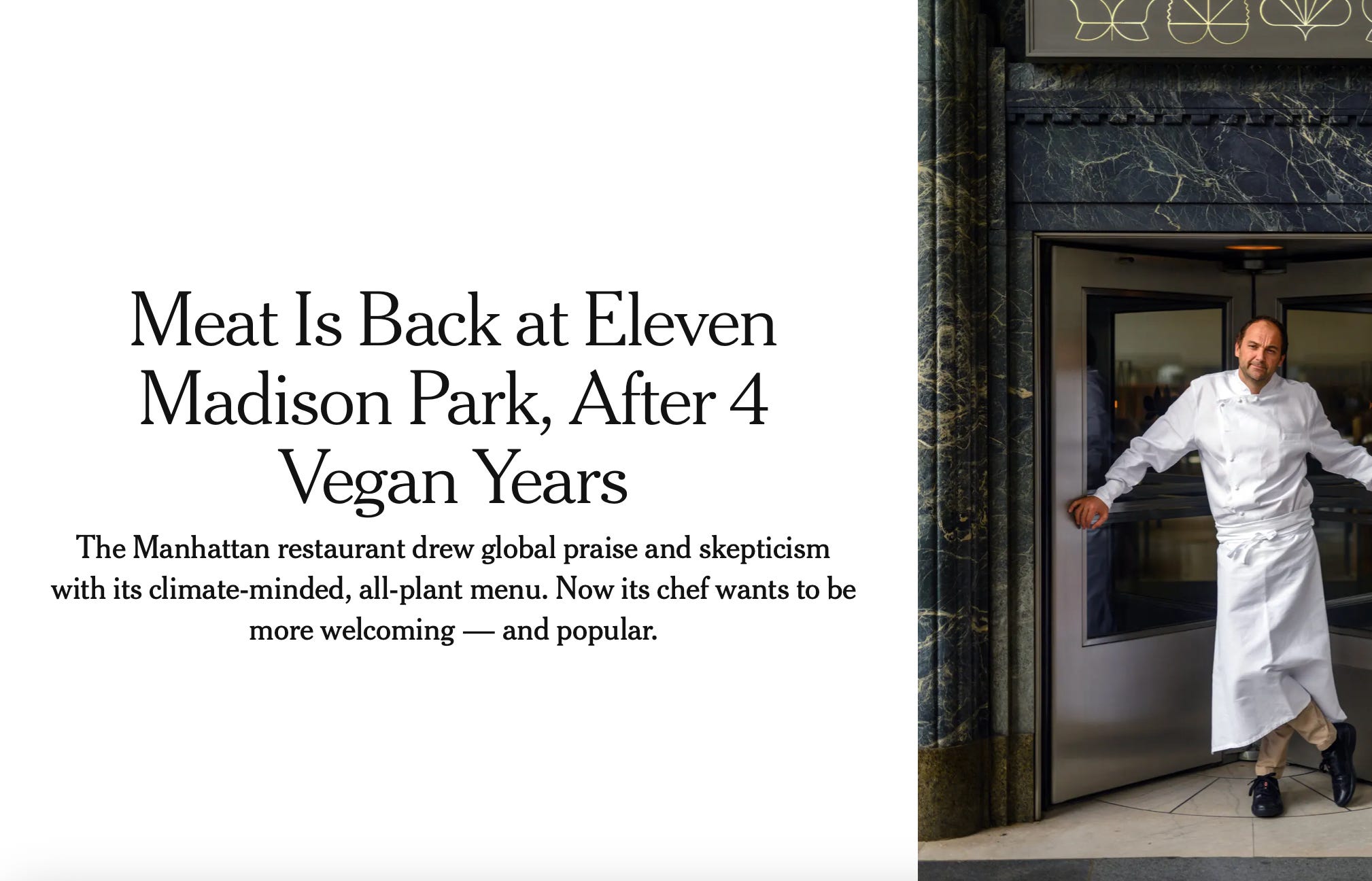
“Eleven Madison Park, which had divested from animal products to extreme fanfare four years earlier, would go back to serving meat… Beyond Meat, once valued at more than $14 billion, announced a debt-restructuring deal to fend off bankruptcy and briefly became a meme stock.”
Will luddism suffer the same fate as veganism?
Recently, Vogue declared time spent offline as the new social currency and The New Yorker insists that it’s cool to have no followers now. Especially in a climate where everything is performative, I’m curious to see what will stick.
With tech abstinence, A-list celebrities are in the eye of the storm
Hollywood A-listers like Wes Anderson, Kristen Stewart, and Paul Mescal (crazy combo) make it a point to not be online. George Clooney famously didn’t own a cell phone, but that’s easier to achieve when you have a team of people following you, organizing your day, and escorting you places… no?
One of the few things I do love about social media is how life-changing one TikTok can be for a struggling business. Sure, the restaurants that go viral aren’t always life-changing, but just imagine what that level of traffic can do for the owners!
While building an audience is not mandatory for every job in our current cultural moment, there are undeniable benefits in doing so: artists get commissions through Instagram, dancers join companies through TikTok. The question arises: can you afford to not build an audience? Clooney can, his reputation precedes him.
To take it a step further: since social media has revolutionized discovery and made it possible for organized activism to gain almost instant, wide-spread traction (eg. Instagram and the 2020 BLM protests), what happens when the cause you’re organizing for is abstinence from social media platforms itself?
The hypocrisy of preaching an analog lifestyle online
As a personal fan of Kyle Chayka, The New Yorker’s resident internet writer, I fear the day he writes a scathing hit-piece about blogs like mine. I know it’s narcissistic to think that it’s even on his radar, but a girl can dream. I imagine it’d take the format of the many trad-wife, cottage-core takedowns I’ve read (and enjoyed), critiquing the hypocrisy of preaching a so-called ‘offline’ life online.

My response (while probably unsatisfactory) is this:
Yes, there’s great work being done to help people find communities offline. Fellow neo-luddite Nick Plante runs a NYC newsletter that surveys events about going offline and RedCal is a handy resource to discover events without social media.
Thing is, I’m lucky enough to live in New York City (one of the densest places in North America) where I can attend these events. But what if I wasn’t? How else do I find these communities? 39% of y’all (my dear readers) are based outside of the states!
The unflattering truth is that, had I not posted my first blogpost on Instagram (carnal sin), I wouldn’t have discovered RedCal, Nick’s work, the NYC luddite community, or any of the fabulous people who’ve personally reached out to help me on my journey.
I don’t think we should dismiss the one thing that actually makes the internet great. Yes, the way social media is structured has made the term ‘connection’ perverse, but it does unfortunately help us find community. It is capable of bringing us together. We just need to be using it the right way. The original luddites selected the machines they destroyed based on its capacity to do harm. Perhaps we should be selective in the way we engage with technology, not rid it in its entirety.
There’s also a key difference between championing the aesthetic of an analog lifestyle and advocating for new ways to engage with technology. I don’t believe the solution to all our qualms about mental health, attention deficits, even productivity gains lies in purchasing Dumbphones or Bricks to unplug entirely — even if it’s the most algorithmically-friendly approach! More on how to reclaim, not quit tech.
Are you vegan to say you’re vegan? Are you using a flip phone to say you’re going analog?
There still remain corners of the internet that aren’t subject to engagement-maximizing algorithms. Most of the resources I consulted when first learning to divest from a life online is, well, online. My friend Spencer Chang dives deeper into the positive pockets of the web in his piece on the alive internet theory.
Call me an idealist, but I wonder if offering an entry point for folks to access those corners of the internet (even if they find me via an algorithm) could do more good than harm. Could we bring back the original internet?
Yes, I’m prepared for the winces at my ‘change-from-within’/ ‘necessary evil’ argument. How very wannabe Eminem in 8 Mile of me.
So… should we bother?
If we follow the trajectory of veganism, we see that consensus around its health benefits has been called into question following the protein-craze of the 2025 (among other tallow-related things).8 Will the same doubt be cast on our unshakable belief that productivity and mental health comes from reduced screen time?
Will your recent MP3 purchase just be something that you eventually shove in a storage closet, next to the MP3 player you had purchased 10 years prior?
My immediate sense is no — these are two different things. But Ian Bogost’s Atlantic piece on how we should think about ‘screen time’ differently makes a great point:
“Screen time is not a metric to optimize downward, but a name for the frenzy of existence in an age defined by screens… the fact is, you cannot participate fully in contemporary life without devoting a substantial amount of time to the screen… ”
It all depends on why you’re really doing this. The same way making mushrooms as satisfying as meat is an uphill battle, reframing our relationships with tech is not going to be easy. We’re looking at changes in work/hiring culture, infrastructure, and some degree of neurological rewiring!

Toward the end of Sugar’s post-mortem of veganism, she offers her readers a glimmer of hope: vegan restaurants are finding new life by expanding their target demographics while ‘regular, carnivorous’ spots are adjusting to the new normal.
But even at the steakhouse, there’s a good chance there’s now at least one meat-free main dish. One of the reasons vegan restaurants have “slowed down,” suggested [Ravi] Derossi, [chef of Cadence,] is that the movement has, in some sense, been successful."
Veganism might’ve been unattainable and intimidating at one point,9 but the explosion of its popularity managed to spark institutional changes that made the lifestyle more affordable and accessible today — there’s always at least one vegetarian/vegan option on the menu. Could this be a preview for the future in the neo-luddite cause? Could this luddite movement (however long it lasts) win back the right to log off?

Ditching labels may be our only shot at keeping this “trend” alive
There are a million different reasons why someone might want to break up with their phone, just as there are endless reasons why someone might want to be vegan. Ideological disparities are often where the movement starts to turn on itself, but let’s not forget we’re here to do the same thing: reclaim our relationship with tech. Could abstinence from tech the last bi-partisan issue left?
When talking about veganism’s future, Sugar gives the example of Cecily Tinder, who owns the grab-and-go vegan café Electric Beets in Park Slope and toed the difficult line of running a restaurant that was “vegan enough to communicate to vegans that you’re vegan, but not so vegan that you alienate the vast majority of the dinner-seeking population.” Success was in part measured in the number of regulars who weren’t vegan. Pivoting from ‘vegan’ to the friendlier ‘plant-based’ branding was absolutely crucial. What would the neo-luddite equivalent of being ‘friendlier to the masses’ look like?
The tech resistance takes many forms. You have anti-tech activist by the likes of August Lamm and NYC’s Lamp Club advocating for smartphones to be destroyed via SHITPHONE rituals; knowledge influencers like Caitlin Begg who run TikTok pages on tech and media literacy. Lifeloggers on Reddit tracking and sharing their screen times to optimize productivity and develop mutual accountability. Anti-big tech artists like 100 Rabbits building their own tech in spite of subscription-models. I write this newsletter every Sunday (on a platform that not all neo-luddites on board with)…and many interested in an offline life are mere observers of this discourse.
No, being a luddite is not reserved for those more well off. To escape the fate that veganism faced, we should decouple the Y2K, Dumbphone aesthetic from the neo-luddite. We should acknowledge how logging off may be more difficult for some than others and steer clear of alienating those interested in favor of crisper labels…
What do you think the ‘plant-based’ rebrand of anti-tech could be called?
Hello! If you’ve made it this far — thank you for joining me on my neo-luddite pilgrimage. If you’d like to support some of my more rogue ventures in cyber celibacy (typewriters, building a printing press… more to come), upgrade to paid! You’ll find treats sprinkled in your inbox <3
Guilty as charged
Unlike how alternative milks (almond, soy, or oat) cost 2–3× more than dairy milk and protein substitutes were roughly 67% more expensive than regular protein, leading the neo-luddite lifestyle doesn’t require purchasing additional goods.
Projects like LinkNY in 2016 helped integrate internet connectivity into city infrastructure by replacing old phone booths with Wi-Fi kiosks and offering charging/calling/city-service portals.
In 2016, vegan-oriented wellness retreats typically ranged from approximately £750–£995 (~$1,100–$1,300) for week-long programs in Europe to around $1,395–$1,795 for 5-day all-inclusive retreats in places like Australia
The MAHA merch store started selling MAKE FRYING OIL TALLOW AGAIN hats. lol.
Specifically with reference to North America, where veganism was relatively new compared to where the movement originated.
tbh, for me the staying power of being low-tech is the fact that i’ve spent very little money on this habit so far. the ipod shuffle i have is my mom’s, which she kept in a box in her office once she stopped using it, and gave it to me over christmas this year. my kindle was a gift. from when i was in middle school. it still works, it’s still good. i do have a Brick, but that was a gift, too. if i hadn’t been gifted it, i wouldn’t have bought it. i get books from little free libraries. i get dvds and cds from the thrift store. my roommate has a cd player that we share. my dvd player is thrifted. my tv is old and i got it for free. i’ve been very lucky with how much of my “low-tech” tech has come to me either cheap or completely free. and because of that, i’ve acquired it all pretty slowly. so for me at least, i think this habit has staying power. it’s not an investment i feel pressured to continue, it’s a habit my life has naturally grown into.
It’s always so weird to see people say that it’s hypocritical to post about analog living online. The assumption must be that anyone posting about analog-related ideas must be promoting being 100% offline, but that isn’t the case at all.
Should we write books to demonstrate how great reading is? Should I tell people at the gym how great exercise is? If anything, the internet is the perfect place to talk about going offline more; this is the audience that needs it the most.
I also don’t think the benefits of social media should be attributed to social media alone. By that, I mean all of the benefits of social media are available offline as well. We can, and for decades did, form communities and discover new ideas and content without the help of the internet. Sure, without the internet I wouldn’t know who Chris Williamson is, but I wouldn’t have spent that time just twiddling my thumbs and watching the grass grow without YouTube.
All of this comes with the asterisk that I am, evidently, still a social media user, but for me, the analog living trend has been part of what has helped (is helping) me spend less of my time online, and more time in the real world, my real world. When I turn the computer or my phone off, the pixels disappear and my life still looks exactly the same as before.
Of course technology, including the internet, offers benefits we wouldn’t have otherwise. I have a home server, I’m a tech nerd, go internet! But at the same time, I think we turn to it and our devices too often to do things we can achieve in other ways, to our detriment. This whole analog trend is the solution to that, and in my opinion, it is really just saying something like “be conscious of what you are using the internet for”.
I enjoyed your essay, especially trying to figure out what your conclusions were going to be; I couldn’t pick exactly where you were going with it at times. I think I disagree with some points, but it was also really interesting to hear it compared to veganism. I’m sure a lot of influencers and companies are using this trend for to gain followers or revenue, but that will be true of all trends and shouldn’t be a reflection on the core ideas.